

AI Voice Agents - The Complete Guide to Voice Chat (2025)
Learn everything about an AI voice agents, its benefits, implementation tips, and the AI voice chat applications for business success.
Longer wait times, high call volumes, and language barriers in call centers often frustrate customers. Complex interactive voice response (IVR) menus only add to the problem, leading to customer dissatisfaction. That’s why companies are adopting smarter self-service solutions like artificial intelligence (AI) voice agents. In fact, experts predict the voice bot market will reach $98.2 billion by 2027, showing a clear trend toward smarter solutions to improving customer experience.
AI voice agents technology combines Natural Language Processing (NLP), machine learning, and voice recognition to transform customer interactions. It provides quicker, more efficient service and improves the overall customer experience.
In this guide, we'll explore what AI voice agents are, their key features, practical use cases, and tips on how to implement a voice agent in your business.
What is an AI voice agent?
An AI voice agent is a two-way conversational tool that communicates with the customer. It automates inbound and outbound calls without human intervention and transfers calls to a human agent when needed.

The biggest advantage? Callers can navigate an IVR by speaking naturally, without listening to long, complex menus or pressing numbers on a keypad.
Popular AI voice agent examples include Apple's Siri, Google Assistant, and Amazon's Alexa. These tools simplify interactions, provide instant answers, and automate tasks. In contrast, advanced bots like IBM’s Watson Assistant and Microsoft’s Cortana handle customer support, sales inquiries, and internal communications.
Types of AI voice agents
Here’s a breakdown of the four main types of AI voice agents and how they can benefit your business:
Rule-based AI voice agent
Rule-based voice agent use predefined sets of questions and rules to offer answers or perform tasks. Such voice agents handle routine tasks and customer FAQs. They answer all queries that fall under the if-this-then-that logic.
For example, an e-commerce site using a bot to guide customers in checking their order status or a banking site handling routine inquiries like balance checks, bill payments, transaction histories, etc.
AI-assisted voice agent
AI-assisted voice agents use machine learning and natural language to interpret conversations so they can analyze the context and grasp what the speaker means. This makes them far more capable and user-friendly than the conventional, rule-based voice agents.
Let’s suppose a user asks Alexa, 'What's the weather tomorrow?' and then follows up with, 'How about next week?' it remembers the context. This adaptability means customers don’t have to repeat themselves, creating a more contextual customer experience.
Conversational AI voice agent
Conversational voice agents make conversations using natural language. They’re more nuanced than AI-assisted voice agents as they can handle complex conversations using everyday language to create more personalized interactions.

Google Duplex, and IBM Watson Assistant, are examples of conversational voice agents. They can make phone calls, make reservations, and handle natural conversations with a human-like tone.
Voice-activated voice agent
These bots use voice commands to answer practical questions and perform routine tasks. They are more flexible than personal voice agents that adapt to speakers and perform customized tasks.
Such bots serve as digital assistants to AI-assisted bots like Siri.
How does an AI voice agent improve customer engagement?
A customer calling your sales team wants to feel valued and understood. An AI voice agent does that. It puts the customer at the center, creating a better experience and driving business benefits as a result. Let’s understand it with a few use cases.
Use case: Get a quick update on order status, 24/7

Assuming the AI voice agent is integrated into your CRM, it greets the customer by name. Instead of navigating through a branched IVR to get their order status, the customer can simply say ‘order status’ and the voice bot pulls out the order details from the CRM and gives the user a real-time update within seconds.
Sheraz Ali, the Founder of HARO Links Builder states that their voice agent managed over 30% of customer interactions in one of their company projects and drastically reduced wait times.
“It also improved our response efficiency and led to a 20% increase in customer satisfaction scores and a reduction in operational costs within three months.”
Benefits:
- Decreased waiting time.
- Limited IVR menu navigation.
- No human intervention is required.
- Quick response times.
- Reduced business costs.
- Tangible increase in customer satisfaction.
Use case: Improve language learning for students

A language learning platform uses a voice agent to provide real-time translations and personalized tutoring. So the voice agent instantly supports students in any subject by translating and clarifying complex terms in their preferred language.
Benefits:
- Reduced requirement for multilingual staff.
- Increases inclusivity as the bot answers in the user’s preferred language.
- Language barriers are removed.
Use case: Improve patient outcomes in healthcare

It's easy to miss appointments or forget to deliver prescriptions to the patient’s home timely. A healthcare service can employ a voice agent to deliver personalized care and offer preliminary health assessments, medication reminders, and easy appointment scheduling, all according to the individual patient's needs.
Benefits:
- Saves time by streamlining appointment bookings.
- Ensures medication adherence with timely reminders.
- Reduces workload for healthcare providers with automated support.
Use case: Streamline routine financial services

Once integrated with the banking system, the voice agent automates routine financial tasks, provides instant account information, processes transactions, and delivers personalized financial advice around the clock.
Benefits:
- 24/7 access to financial services without wait times.
- Improves customer experience with quick, accurate responses.
- Automates routine tasks, freeing up staff for complex queries.
- Provides personalized advice to improve financial decision-making.
Use case: Get personal shopping assistance

An e-commerce platform can use a voice agent to assist customers with product selection, provide personalized recommendations, and automate the sales process from start to finish.
Benefits:
- Delivers a personalized shopping experience 24/7.
- Boosts sales with customized recommendations.
- Reduces cart abandonment by guiding customers to checkout.
- Improves customer satisfaction with fast, accurate service.
Features of an AI voice agent
To understand why voice agents are so effective, let’s look at the key features that improve the overall customer service experience while streamlining business operations.
The best voice agents for businesses come equipped with:
Natural language understanding (NLU)
An AI voice agent understands user queries by converting speech into text using AI and NLP. It then forms an appropriate response and converts it back into speech using text-to-speech (TTS) technology. This ability to understand and respond in natural, conversational language sets AI voice agents apart from traditional IVR systems, which rely on rigid, menu-based responses.

Personalization capabilities
Customers want quick, personalized responses to their queries, unlike complex IVR systems that frustrate them with lengthy menus. An AI voice agent offers contextual conversations, adapting to the user’s intent. It detects speech cues, skips irrelevant interactions, and also transfers calls to the right agent.
Hence, when comparing voice agents to IVRs, the bot's ability to offer personalized interactions like a human outshines communication systems that follow even the best IVR practices.
Multi-language support
AI voice agents break down language barriers, supporting multiple languages to provide a more inclusive and accessible customer experience. Businesses can easily connect with diverse customer bases across the globe.
For instance, Plivo supports speech recognition in 27 languages and their regional variants.
{{cta-style-1}}
Integration with other platforms and services
AI voice agents easily integrate with platforms like customer relationship management (CRM) systems, Enterprise resource planning (ERP) tools, and ticketing software. They access and update customer data in real time to ensure accuracy.
These bots also pull relevant details, automate follow-up actions, and sync with communication channels like email or chat. This creates a personalized and consistent customer experience across all touchpoints.
Benefits of voice agents
Let’s now look at the benefits of AI voice agents.
Enhanced user experience
Many businesses have concerns over the quality of a voice agent for customer service. However, a voice agent answers queries quickly regardless of the time of the day. Speedy, reliable answers are important to providing excellent service, making voice agents an invaluable tool for businesses looking to improve customer satisfaction.
Additionally, businesses can:
- Handle routine queries and common tasks faster than human agents.
- Remove the need for users to navigate complex IVR menus.
- Manage high-volume calls without errors.
Better cost efficiency
An AI voice agent doesn’t just save time, it also saves money. It boosts user satisfaction and reduces support times by automating repetitive queries. This frees up staff for higher-value tasks, and interacting with customers after hours has improved lead conversion.
The direct benefits to businesses are:
- Reduces the need for a larger customer support team.
- Allows human agents to focus on complex, high-value inquiries.
- Engages users outside business hours to boost marketing return on investment (ROI).
- Lowers training costs and minimizes the risk of providing incorrect information.
Accessibility for users with disabilities
With over one billion people living with disabilities worldwide, voice agents make services more inclusive. They enable hands-free, accessible interactions, allowing customers with visual, motor, or cognitive impairments to engage with the business easily. This not only improves customer satisfaction but also broadens the company’s reach to a more diverse audience.
Data collection and analysis for improved services
Voice agents don’t just serve customers — they also gather insights. Use this data to analyze data and improve services, personalize marketing efforts, and make more informed business decisions.
24/7 availability
Unlike human agents, voice agents are always accessible. They ensure customers get help whenever they need it, contributing to a more consistent and reliable customer experience.
Future of AI voice technology
As IBM's data engineer, Chris Hay puts it, "We're entering an era where every mom-and-pop shop can have the same level of customer service as an enterprise." This statement captures the transformative potential of voice recognition technology.
AI voice chat applications benefit businesses of all sizes by delivering top-tier customer experiences. Tech giants are already paving the way. Microsoft has updated its Copilot AI with advanced voice capabilities, allowing it to handle complex queries with natural language reasoning, while Meta has introduced voice AI to its messaging apps.
AI voice assistants will move beyond smartphones, integrating into wearable devices like the recently unveiled Meta Orion augmented reality glasses. For businesses handling sensitive client relationships, this could mean smarter, empathetic bots that mirror the tone and approach of a human assistant.
Key upcoming trends:
- Hyper-personalization: Customized voices and targeted recommendations.
- Advanced problem-solving: Managing complex queries using natural language.
- Real-time analytics: Analyzing customer tone for deeper insights.
Yet, challenges remain. Arvind Rongala, the founder of a skill-management solution provider, shares, “There are still issues, especially with data privacy and ensuring interactions are human-like. In addition to resolving problems with bias in training data and regulatory compliance, businesses must strike a balance between automation and personalization. For example, adhering to GDPR regarding the storage of voice data can be challenging, but doing so is essential to fostering trust.”
Ultimately, businesses need to prioritize data security, explore multi-device integration options, and develop stronger contextual understanding for natural interactions.
Launch an AI voice agent with Plivo
Any scaling business needs a voice agent that's easy to integrate, globally accessible, and cost-effective without sacrificing quality.
Plivo checks all these boxes, offering seamless integration, seven global points of presence for low-latency interactions, and competitive rates starting at just $0.0040 per minute. It's ideal for businesses willing to scale while keeping operational costs in check.
In fact, Plivo can reduce operational costs by up to 40%.
Moreover, its commitment to reliability is backed by a 99.99% uptime guarantee, with failover capabilities that switch within two seconds if any disruptions occur.
You can launch voice agents with Plivo using just a few lines of code.
- Log in to your OpenAI Account: Secure your API key and RealTime API access.
- Log in to your Plivo Account: Sign up and get a voice-enabled number.
With integration options for leading speech-to-text (STT) and TTS providers like Deepgram and ElevenLabs, you can launch AI voice agents in multiple regions, including India, using local numbers.
Use Plivo-powered voice agents for:
- Personal shopping assistance: Offer personalized recommendations, go through product selections, and close sales.
- Healthcare automation: Improve patient outcomes with medication reminders, and appointment scheduling, and offer preliminary health assessments.
- Inclusivity in education: Break language barriers in learning with real-time translations and personalized tutoring across multiple subjects.
- Routine financial services automation: Provide instant account information, personalized financial advice, transaction processing status, etc. to customers.
With a 24/7 AI voice agent, your business can handle these tasks around the clock, ensuring that customers are never left waiting. Want to improve customer experience with Plivo? Contact us today.
.png)
Top 8 AI voice agents for sales in 2026
Compare the leading AI voice agents for sales, and see how Plivo can automate conversations, qualify leads, and scale customer engagement.
In today’s world where instant gratification has become the norm, most B2B buyers still prefer phone conversations for complex sales discussions, a majority of them expecting immediate responses. In such a scenario, enterprise sales teams face a dilemma: phone calls drive conversions, but hiring enough reps to cover qualification calls, follow-ups, and after-hours requests quickly becomes unsustainable.
AI voice agents solve this by automating high-volume tasks while maintaining the personalized touch buyers expect. They offer 24/7 lead qualification, instant responses, and unlimited scalability without expanding headcount.
This guide evaluates 8 leading AI voice platforms for sales teams based on several key factors, helping you identify the right solution for your sales operation.
Why businesses need AI voice agents for sales
Apart from taking calls, AI voice agents make your organization more than efficient because they scale your organic conversation without getting tired. Here are a few use cases for AI voice agents in sales that not only streamline your sales process but also identify emerging trends in customer behaviour and accordingly nurture relationships with potential leads.
Automation of Repetitive Task
Taking calls round-the-clock while maintaining all data simultaneously can eventually become intimidating for sales teams. AI voice agents can automate such tasks, allowing reps to redirect their energy toward higher-level opportunities.
Delivering Tailored Interactions
AI voice agents can be very versatile while answering customers, giving responses tailored to their needs and preferences. It’s a given that personalization plays an essential role in customer retention.
Predicting Customer Behaviour
AI agents aggregate customer data from multiple touchpoints. Sales teams can then use these insights to anticipate customers’ needs and proactively engage them with highly relevant product recommendations or targeted offers.
Cost Reduction
Voice agents can significantly reduce your operational costs by handling a high volume of queries without requiring additional human resources.
Scalability
AI voice agents can effortlessly manage growing volumes of customer interactions, making them perfect for businesses aiming to expand while maintaining high service standards.
Quick Overview of the top AI Voice Agents for Sales
8 Best AI Voice Tools For Sales
1. Plivo
Best For: Businesses looking for reliable automation for key customer moments during sales calls, prioritizing performance, uptime, and global connectivity.
Plivo is a voice-first, AI-native communications platform built for organizations that want to operationalize AI agents in real customer environments, not just pilot projects. Unlike fragmented solutions that require stitching together telephony vendors, orchestration layers, and messaging APIs, Plivo delivers a single-stack environment that unifies voice, SMS, WhatsApp, chat, and email into one production-ready platform. For enterprises evaluating platforms at the decision stage, the differentiator is not just intelligence; it’s whether conversations feel real at scale.
In AI voice automation, especially for sales, timing matters as much as reasoning quality. Most AI pipelines rely on ASR → LLM → TTS conversion, where each step introduces latency. Once response delays exceed ~400 ms (the ITU-T G.114 threshold), conversations become mechanical, and users disengage.
Plivo addresses this with live audio streaming over WebSockets, enabling AI agents to listen and respond in near real time while it manages the telephony infrastructure. This architecture allows organizations to plug in their LLM models without reworking the calling layer, future-proofing AI investments as models evolve.
One of the major advantages of using Plivo is its support for the entire lifecycle of customer engagement, with 24/7 automated, natural-sounding interactions. The platform offers extensive global reach across 190+ countries, enabling businesses to scale sales without increasing headcount.
What makes using Plivo interesting is its ability to handle all your customer requests without you being involved at the front desk. Its natural language builder (Vibe) enables teams to set up integrations and get them test-ready in minutes. Plivo's single-stack approach significantly reduces latency and improves reliability, delivering 99.99% uptime and compliance with standards such as HIPAA, GDPR, and PCI DSS.
Key Capabilities
- Build agents in minutes: Teams can quickly build AI voice agents with Vibe, with no coding required.
- Effortlessly troubleshoot voice agents: The platform enables you to self-troubleshoot common tech queries using its knowledge base, and only routes complex cases to humans.
- Quick customization: You can edit workflows, add rules, and personalize responses as needed.
- Pre-built templates: Plivo allows you to kickstart faster with customizable templates for support, sales, bookings, and more.
- Omnichannel engagements: Your sales team can take action at the right moment across every channel.
- Personalized AI agents: The platform makes it extremely easy to train agents on your knowledge base, FAQs, and brand guidelines so they respond like your team.
- Real-time analytics and observations: You can monitor performance, simulate conversations, and refine agent behaviour in real-time
Pros
- Built-in telephony: Native phone numbers, global connectivity, and SIP trunking without dependence on external carriers.
- Reduced latency: Owning the telephony infrastructure eliminates the need to hop to third-party carriers, ensuring faster response times.
- Seamless scalability: Start with a small no-code workflow and scale to a fully programmable production system without rebuilding.
Pricing
Plivo offers pay-as-you-go pricing on our Professional plan with no monthly commitment, while Enterprise plans start at $1,000 per month for teams that need higher scale and dedicated support.
2. Lazr.AI
Best For: Teams looking for turnkey solutions with minimal setup.
Lazr’s pre-built voice platform offers robust and flexible deployment options. Instead of building voice workflows from scratch, the tool offers 40+ pre-configured agents designed for specific inside sales functions. Teams can deploy specialized agents for lead list building or call recording analysis within minutes. The platform’s dual deployment model makes it suitable for security-conscious enterprises.
While the pre-built agents are powerful, customization beyond their designed parameters may require technical expertise. The platform focuses more on agent deployment than complete workflow automation.
Key Capabilities
- Get 40+ pre-built sales agents for ICP generation, AI dialling, and call analysis.
- Offers voice agent builder with natural language commands
- Comes with dual deployment options (SaaS or on-premise)
- Offers enterprise-ready integrations with 250+ LLMs
Pros
- Quickly build AI agents using a low-code/no-code interface.
- Get enterprise-grade security with on-premise and private cloud deployment options.
- Focuses on providing necessary guardrails and infrastructure.
Cons
- Lacks advanced customization options for complex AI implementations
- Fewer community-driven resources compared to more established platforms.
Pricing
Custom pricing based on deployment model (Cloud vs On-Premise) and agent usage.
3. PolyAI
Best For: Businesses looking to scale, multilingual voice AI solutions for customer service.
As one of the top conversational platforms, PolyAI specializes in creating lifelike voice assistants for enterprise customer service. Unlike other AI voice tools, PolyAI started with text; it specializes in voice. The tool mainly focuses on handling, understanding, and resolving issues in phone calls, including managing interruptions, accents, and emotional language.
While PolyAI utilizes its own speech recognition engine, it enables sales teams with high-quality, conversational, context-aware, and on-brand dialogue. The platform offers 45+ languages, enabling teams to integrate into their existing systems.
Key Capabilities
- Conversational AI agents quickly handle complex customer enquiries.
- Supports more than 45+ languages with natural voice and tone.
- Easy plugin options with existing CRMs and telephony systems.
- Provides omnichannel support, including voice, chat, and SMS.
Pros
- Reduce wait time and provide 24/7 support.
- Handles sudden spikes in call volume effortlessly.
- Resolves 87%+ of customer service calls end-to-end.
Cons
- A real-time dashboard needs either sentiment analysis or granular call-path tracking.
- Pricing is not publicly disclosed, so direct sales consultation is required.
Pricing
For some configurations, pricing ranges from $0.09 to $0.15 per minute; however, contracts start at $150,000+ per year.
4. Vapi AI
Best For: Businesses that need customization and integration with existing systems to handle high volumes of concurrent calls.
Vapi is a developer-focused AI platform that enables businesses to create highly customizable voice agents. Apart from handling both inbound and outbound calls, Vapi enables near real-time voice interactions—responding in 550 to 800 milliseconds.
Designed as an API-first platform for building AI phone agents, it is a popular choice among teams that need fully programmable, flexible AI phone agents for sales. But using Vapi does require technical knowledge; it is best for organizations with in-house development teams.
Key Capabilities
- Real-time orchestration for low latency (sub-600ms)
- Flexible integration with STT, TTS, and LLMs
- Create squads of specialized bots for complex workflows.
- Support telephony and web integrations
Pros
- Allows you to tailor every component of the voice experience.
- Offers real-time processing for fast and natural conversation
- Scales to handle a high volume of calls
Cons
- Requires significant technical expertise; not a low-code solution.
- Building and maintaining reliable, high-performing bots is time-consuming.
Pricing
Vapi follows a pay-as-you-go model, starting at $0.05 per minute.
5. Cognigy
Best For: Sales teams who need deep conversation analytics, automated QA, and AI-powered coaching to improve existing performance.
As an enterprise-grade Conversational AI platform, Cognigy is designed to automate and enhance customer service experiences across voice and chat channels. The platform uses Large Language Models (LLMs) and Generative AI to create agents that understand context and memory, and make real-time decisions.
As a specialised tool that bridges the telephony system with the voice gateway, Cognigy's low-code flow editor is perfect for designing complex, multi-channel conversations. The tool is best suited for medium to large enterprises seeking to implement advanced AI-driven customer service solutions across multiple channels.
Key Capabilities
- Allows companies to maintain high compliance while utilising AI.
- Offers enterprise-grade security with GDPR compliance.
- Offers 100+ integrations with existing CRMs and CCaaS systems.
- Specially designed for high-volume enterprise environments.
- Allows AI agents to ingest internal data, reducing the need for manual FAQ.
Pros
- Offers top-tier conversational AI and generative AI capabilities
- Low-code/no-code option for quick flow creation
- Seamless integration with CRM, ERP, and backend systems
- Offers omni-channel services, including chat, SMS, and calls.
Cons
- Implementation takes 2-4 weeks.
- Building complex custom extensions can be difficult for non-technical users.
- Requires significant cash, making it unsuitable for small businesses.
Pricing
Cognigy starts at around $2,500/month for lower usage, but for full deployments it often starts at $300,000.
6. Lindy
Best For: Businesses of all sizes seeking to automate routine tasks.
As a versatile voice AI agent, Lindy primarily automates a wide range of business tasks, including scheduling meetings and drafting emails, managing CRM updates, and conducting phone calls. With its no-code tool builder, Lindy has become popular in building custom AI agents tailored to the specific workflow needs. Lindy is primarily built as an internal workflow automation tool for business process automation and task orchestration. However, it does require additional support for real-time customer interaction.
Key Capabilities
- The tool can quickly scan prospects based on predefined criteria and populate your CRM.
- It drafts personalized messages to research prospects and provide richer insight.
- It acts as an inbound sales agent, responding to inquiries and answering FAQs.
- It automatically assigns qualified leads to the appropriate sales rep and notifies them.
Pros
- Capable of handling end-to-end sales tasks.
- Extensive integration for automatic data logging.
- Offers a high volume of sales tasks easily.
- Allows non-technical sales staff to build complex queries using natural language.
Cons
- It is not optimized for high-volume, real-time voice conversations.
- Its learning curve requires time to master complex flows.
- Uses a credit-based system where complex tasks can consume credits rapidly.
Pricing
Lindy offers only 400 credits monthly with access to Agent Builder, Lindy Build, and a 1M character knowledge base. However, the pro plan starts at $30–$50/month, depending on the usage.
7. Bland AI
Best For: Primarily designed for enterprise and technical teams that need to automate high-volume phone calls.
Bland AI is an enterprise-grade AI voice tool that supports inbound calls. Although the tool claims its agents sound like humans, it unapologetically supports technical teams. Teams can design pathways to keep conversations on script and aligned with defined objectives.
Businesses can use the drag-and-drop builder and run prompts in real time. This makes it ideal for teams that want to deploy a sales tool quickly without a developer. Even teams can clone voices from short audio samples and run thousands of calls concurrently using dedicated infrastructure.
Key Capabilities
- Agents can quickly handle thousands of concurrent calls for cold calling and qualifying leads.
- It makes sure that inbound sales inquiries are answered instantly, even after hours.
- The platform connects with platforms like HubSpot and Salesforce, triggering calls based on CRM events.
- It offers real-time interactions, book appointments, and send follow-up SMS.
- It offers 24/7 coverage, instantly engaging inbound leads, and improving conversion rates.
Pros
- Highly capable of managing large batches of inbound and outbound calls.
- Teams can effortlessly customize tone and voice for a more dynamic conversation.
- Quick, ~800ms latency allows for natural conversation flow.
- Supports custom LLMs, voice cloning, and deep CRM integration.
Cons
- Requires an engineer or developer to set up and maintain the tool.
- Costs can spike with failed calls or high-volume calls.
- Offers limited support to businesses.
- Sometimes, there are hidden costs apart from base rates.
Pricing
Bland AI follows a usage-based pricing model; however, it starts at $0.09 per connected minute for actual call time and interactions.
8. Synthflow
Best For: Small to medium-sized businesses looking to automate customer interactions.
Synthflow AI is a no-code conversational voice AI platform designed to automate inbound and outbound sales. It enables businesses to build and deploy AI-powered voice assistants for automating phone calls.
The tool acts as an automated sales rep, initiating calls, nurturing leads, and answering questions in real-time. Synthflow integrates with 9,000+ apps via Zapier and natively with major CRMs, ensuring call data, summaries, and recordings are automatically logged.
Key Capabilities
- Handles unlimited, parallel calls, ensuring no missed opportunities.
- With 24/7 response times, it significantly improves lead qualification speed.
- Uses advanced voice synthesis for natural, human-like conversations.
- Agents can schedule, reschedule, or cancel meetings directly.
Pros
- Effortlessly create voice agents without developer resources.
- Seamless integration with HubSpot, GoHighLevel, and other CRMs.
- Offers faster setup for immediate sales use cases.
- Offers white-labelling to resell AI agents.
Cons
- Challenges in latency and response time.
- Offers limited customization with the tool.
- Occasional support for lower tier users.
Pricing
Synthflow uses a tiered subscription model, often including pre-paid minutes, with costs decreasing as you scale.
Try Plivo For Free
In 2026, buyers are looking for immediate response, personalized engagement, and seamless conversation- something sales teams are struggling with today. Partnering with an AI voice agent platform like Plivo helps bridge this gap by automating first-touch interactions, qualifying leads faster, and ensuring no opportunity is missed due to delays or resource constraints.
You can automate conversations across channels such as voice calls, SMS, WhatsApp, and web chat from a single dashboard without switching platforms. Using its no-code builder, teams can design, test, and optimize AI-driven workflows while maintaining brand behaviour and business logic.
Starting with a free trial gives you the flexibility to validate performance, reliability, and fit before deciding how extensively you want to adopt the AI voice tool across your business.
Start your free trial and build your first AI voice agent experience today.
FAQs
What is an AI Voice Agent for sales?
AI voice agents for sales are autonomous systems that streamline sales processes throughout the customer journey. Unlike traditional chatbots, these intelligent agents plan, reason, and act independently, often coordinating with other agents or systems to complete complex workflows.
How do AI voice agents work for sales?
AI voice agents work by capturing speech, converting it to text, and then using Natural Language Processing (NLP) to understand the user's intent. The system then uses a dialogue manager to decide on the appropriate action or response, which is generated and converted back into natural-sounding speech for delivery to the user.
Can AI voice agents replace human agents in a sales team?
AI voice agents can’t fully replace human agents, as in most cases, they serve as the first point of contact. These agents are best suited for FAQs, scheduling, and basic troubleshooting, and routing complex tasks to human agents.
Does your team need a no-code or a developer-first platform?
If you have a team with little to no technical knowledge, then scaling with a no-code platform is easier. However, with a team that has engineers by your side and needs deep customization, a developer-first platform gives you more flexibility.
How important are voice quality and response speed for your sales team?
Natural speech and tone matter more because they significantly shape callers' experience. If the AI sounds robotic or pauses too long, it can reduce trust and engagement, especially in customer-facing roles like sales.
.png)
Best Platforms to Build AI Voice Assistants in 2026
Learn about the best AI voice assistant platforms for 2026 for developing robust AI voice assistants. Compare Plivo, Vapi, Retell AI, and other platforms, including their features, advantages, and specifications.
In today’s business landscape, AI voice assistants are already a key part of customer experience. They can cut call wait times dramatically and handle routine questions quickly. Yet many businesses still rely on manual phone support or siloed chatbots. Customers often switch channels but expect a single, seamless conversation. For example, a user might start on a website chat, later call support, and then get a follow-up SMS, but they see it as one conversation. If those systems aren’t connected, the context is lost and support slows down.
The solution is to use a modern AI voice platform that unifies channels and understands conversation context. These platforms use advanced speech recognition and natural language understanding so they can interpret what callers say. They then drive real-time actions like retrieving customer data or scheduling follow-ups. The following sections list some of the top AI voice assistant platforms today, each excelling in different ways, so you can pick one that fits your needs.
Key Things to Look for in an AI Voice Assistant Platform
- Real-Time Conversational Understanding - You need more than speech-to-text and canned replies. Look for strong natural language understanding (NLU) that can track context across the whole call, handle back-and-forth questions, and adapt answers based on what has already been said.
- Omnichannel Integration - Your customers do not stick to one channel. They may start on a phone call, continue on WhatsApp, reply to an email, and later open a web chat. The best platforms keep one shared conversation across voice, SMS, WhatsApp, chat, and email, so the context is never lost when a customer switches channels.
- CRM & App Integrations - A smart assistant is only as helpful as the systems it can talk to. It should connect to your CRM, helpdesk, booking tools, payment systems, and internal APIs. This lets the assistant actually do things like fetch orders, update tickets, schedule appointments, qualify leads, and trigger workflows instead of just “answering questions.”
- Context Awareness & Memory - A good assistant remembers what was said five minutes ago, but a great one remembers what happened in previous calls too, when it is safe and allowed. Look for session memory, access to customer history, and clean human handoff where the whole transcript and context flow to a live agent so the customer never has to repeat themselves.
- Latency and Reliability - Voice calls feel “off” when the response is even a little late. Anything slower than a few hundred milliseconds starts to break the natural flow of speech. Choose platforms that are built on reliable telephony infrastructure, offer strong SLAs, and aim for end-to-end latency under about 300 milliseconds so conversations feel natural and human.
The Best Platforms for Building AI Voice Assistants in 2026
Plivo
Plivo is a full-stack, AI-first communications platform that combines carrier-grade telephony with modern AI agents across voice, SMS, WhatsApp, chat, and email on a single, unified layer. It is built for teams that want reliability and intelligence in the same place.
Instead of treating the AI voice assistant as a bolt-on, Plivo treats it as part of your entire customer communication fabric. Your agents, your AI, and your channels all sit on top of the same global infrastructure and data layer.
Key Features and Capabilities:
- True omnichannel orchestration - Plivo lets you serve customers on voice, SMS, WhatsApp, web chat, and in-app chat from one platform, with a single view of each conversation. Context travels with the customer across channels, so they do not have to repeat details when they move from a phone call to a message thread.
- AI voice agents with ultra-low latency - Plivo’s AI voice agents are designed for real-time conversation, with very low response times so calls feel natural and uninterrupted. Its global points of presence keep audio paths short, which reduces lag and keeps interactions smooth.
- Choice of AI stack (LLM, STT, TTS) - You can plug in leading speech-to-text, language models, and text-to-speech providers like Deepgram, OpenAI, and ElevenLabs. This makes it easy to tune your assistant for your use case, whether you care most about accuracy, style, or cost.
- No-code and API-first together - Non-technical teams get visual, drag-and-drop journey builders and no-code tools to launch AI agents without writing code. Developers get clean APIs and webhooks to embed Plivo into complex backends and custom workflows.
- Deep CRM and app integrations - Plivo connects to popular CRMs, helpdesks, and commerce tools such as Salesforce, HubSpot, Zendesk, Shopify, and many other API-based systems. This allows AI agents to read and update customer records, orders, tickets, and more in real time.
- Reliability, scale, and security - Plivo runs on a proven global carrier network with 99.99% uptime and fast failover, keeping your lines available even during spikes and outages. It offers enterprise-grade security and compliance controls, including strong encryption and support for strict regulatory environments like finance and healthcare.
- Analytics, QA, and coaching - You can monitor live metrics, analyze historical calls, and track performance across agents (human or AI) to keep improving service. Features like call summaries, notes, and real-time coaching help teams learn from every interaction.
Why Plivo Is the Best Choice in This Category:
- One platform for both voice AI and omnichannel CX - Most tools in this space either are great telephony pipes or they are great AI agents. Plivo is built to do both. It works as your backbone for voice and messaging while also giving you AI agents that can answer, act, and escalate across all your key channels. This means you do not have to wire together separate providers for telephony, AI, and omnichannel support, which lowers complexity and integration risk.
- Works for small teams and large enterprises alike - Smaller teams can launch quickly using no-code builders, templates, and self-serve setup. As they grow, they can layer in custom integrations, advanced routing, and strict controls like role-based access, data residency, and detailed audit logs that larger organizations expect. This makes Plivo a platform you can start with early and keep as you scale, instead of outgrowing it in a year or two.
- Strong ROI and cost control - Plivo’s AI voice agents and global infrastructure are designed to reduce operational costs by handling routine calls at scale while keeping call quality high. Its pricing and efficiency can cut voice automation costs by up to about 40% compared with many legacy setups, especially when you factor in fewer missed calls and shorter handle times. Because it connects directly to your CRMs, ERPs, and internal APIs, every minute on the line can do real work.
- Flexible use cases across industries - Plivo powers use cases like:
- 24/7 customer support agents that answer FAQs, reset passwords, and check order status.
- After-hours and overflow handling for busy contact centers.
- Appointment scheduling and reminders for healthcare, salons, and clinics.
- Lead qualification and follow-up for sales teams.
- Proactive notifications, alerts, and renewals for finance, logistics, and subscription businesses.
Because the same platform supports voice, SMS, WhatsApp, and chat, you can keep expanding your use cases without switching tools.
Best for: Teams that want an enterprise-grade, omnichannel foundation and AI voice agents in the same place, especially those who care about reliability, deep integrations, and long-term scalability.
Vapi
Vapi is the go-to choice for teams led by engineers because it behaves like a finely tuned playground for them to work with. Vapi is fast, modular, and programmable at its core. Instead of using a restrictive workflow builder, Vapi offers highly flexible APIs to integrate your preferred speech-to-text (STT) engine, large language model (LLM) engine, and text-to-speech (TTS) engine, allowing you to optimize every component of your voice stack.
It gets its name from providing extremely fast responses and real-time speech, which is perfect for the smart decisions that go into your conversations. Vapi also offers good call routing and analytics with webhooks that are used for call flows.
USP:
- Sub-200-millisecond Latency: By utilizing the capabilities of edge computing, the platform provides ultra-low latency support for seamless conversational experiences.
- Modular Voice Processing Pipeline: Organizations can choose their desired service providers for voice processing capabilities such as speech-to-text, language models, and text-to-speech, among others.
- Webhook-Driven Routing: The use of real-time webhooks allows the organization to specify the decision logic used in the call flow.
Best for: Vapi is best suited for organizations that are heavy on developers and require detailed customization and control so that they can create highly personalized voice interactions.
Retell AI
Retell AI is heavily invested in the areas of conversational accuracy, call quality, and analytics. As such, Retell AI is well-suited for large organizations and call centers that monitor and analyze each and every call they make and receive. It is developed to function under large workloads and large numbers of concurrent requests while remaining clear and responsive.
Another important feature of Retell AI is the focus on learning from live call data and adapting to real-world user behavior. Its adaptive voice models are built to improve over time according to how users speak and what they say. For organizations that handle thousands of calls per day, Retell AI becomes an optimization engine for voice interactions.
USP:
- Adaptive Voice Models: Retell AI’s voice models are continuously improved and adapted according to enterprise call traffic to increase intent recognition and overall accuracy.
- Production-Scale Analytics: Retell AI offers in-depth analytics of call success and failure points, agent performance, and overall compliance via detailed analytics and reports.
- Seamless Human Handoff: Should the need arise, Retell AI seamlessly transfers calls to human operators while maintaining call context and transcript so that customers are not asked to repeat themselves.
Best for: Large organizations and call centers that value analytics and optimization over time just as much as they value real-time call automation and bot interactions.
Synthflow
Synthflow is designed with teams in mind that want to use voice AI without having to do all that engineering work. The visual interface is designed to allow non-technical users such as operations managers, CX managers, or small business owners to create phone agents and flow in just a few hours instead of months. There is no need to wire everything together manually since Synthflow does this internally.
This allows users to create a no-code space that makes AI phone agents that they can test and deploy within just a few minutes. Synthflow is especially good for small teams that want to own their conversations without having to completely rely on developers.
USP:
- Visual No-Code Builder: Synthflow has a visual interface that enables users to create branching conversations without having to write any code.
- Instant Deployment: Synthflow enables users to create AI phone agents that they can deploy to live phone numbers with ease.
- Template Marketplace: Synthflow has pre-built templates that users can use to create flows such as appointment scheduling, order status checks, lead capture, among others.
Best for: Synthflow is particularly good for small businesses that want to have control over their voice conversations without having to do any heavy-lifting.
Cognigy
Cognigy describes its role as a full-scale solution for conversational automation, especially within an enterprise setting, which is particularly applicable to organizations with complex contact centers that offer voice and chat capabilities. The platform is not limited to a specific modality, as it aims to offer a unified layer of automation for artificial intelligence, encompassing telephone, messaging, and agent tools, along with analytics, quality, and human-AI collaboration.
One of the standout features of Cognigy is its support for multilingual automation, particularly in terms of serving global brands with operations in many regions and dealing with diverse customer bases with different accents and dialects. Its agent assist or “co-pilot” features also enable the use of AI alongside human agents, where the AI can provide suggestions and access conversation history in real-time, which can have a huge impact on improving the quality of customer service.
USP:
- Multilingual NLU
- Enterprise Analytics Dashboard
- Hybrid Collaboration
Best For: Large-scale businesses with operations in many regions, particularly those with contact centers that need a unified conversational automation solution with support for voice, chat, and agent assist in many languages.
ElevenLabs
ElevenLabs set out with the lofty goal of providing the most realistic text-to-speech available, and from there, they have continued to grow their capabilities in voice conversation. While they have many great features, ElevenLabs is particularly good in the area of voice quality, with expressive, emotionally driven, and highly customizable voices that can have the tone of the brand, character, or emotion desired, which is particularly useful in media, gaming, and education spaces.
For teams working on assistants that need to have a distinctly “on brand” tone, rather than sounding generic, the advanced voice cloning and multi-lingual capabilities of ElevenLabs are particularly compelling, as they allow brands to create their own unique tone while also minimizing latency.
USP:
- Hyper-Realistic Voice Cloning: The platform allows users to create custom voices with the ability to control the tonal characteristics, speaking rate, and emotional expressions of the cloned voice.
- Multilingual Voice Generation: The platform allows the creation of voice in various languages with naturalistic pronunciation.
- Low-Latency Streaming Text-to-Speech (TTS): The platform provides high-quality, real-time text-to-speech capabilities for the development of conversational agents.
Best for: Brands and content creators that take their assistants’ voice very seriously and want to offer the best voice quality for their users.
Bland AI
Bland AI is an API-centric and telephony-centric solution that provides a high level of control for programmers and developers. Rather than providing a heavy user interface that abstracts away the complexity of telephony and voice integration, it provides building blocks for programmers to implement telephony and voice integration.
The transparent nature of Bland AI also extends to pricing and customization models. This is particularly appealing to programmers and developers who do not like opaque pricing models and bundled solutions. Bland AI is best for situations that require voice integration to be extremely tight and deep within existing phone infrastructure.
USP:
- Telephony-Level Control: The platform provides programmatic access to the SIP and call flow, allowing the integration of the platform with the existing telephony infrastructure of the organization.
- Transparent Pay-Per-Use Pricing: The platform allows the organization to easily calculate the costs of the solution without the burden of high platform costs.
- Custom Voice Models: The platform allows the fine-tuning of the models based on the conversational data of the organization, allowing the agent to conform to the language and policies of the organization.
Best For: Infrastructure-centric teams with high volumes of telecommunications looking to deploy programmable AI over their existing telephone infrastructure.
Thoughtly
Thoughtly is centered on the concept of understanding what is happening on a call, rather than just handling it. Thoughtly's strength is in its speech analysis, sentiment analysis, and pattern recognition on high volumes of conversations, which is most valuable to operations teams, QA teams, customer success teams, etc., who want to understand trends they cannot understand through other means.
Instead of just handling calls, Thoughtly allows teams to understand how calls are going, how they are feeling, and what opportunities or risks exist within them. For teams who are already utilizing voice AI or human call center solutions, Thoughtly can now be used to further optimize these solutions.
USP:
- Real-Time Sentiment Analysis: Emotional tonality and customer satisfaction during the course of a call.
- Pattern Recognition Engine: Identification of recurring call-related issues, problems, and behavioral patterns in relation to high call volumes.
- Predictive Escalation: Identification of potentially problematic conversation paths and initiation of intervention measures before customer disengagement or churn.
Best For: Call centers and customer service teams that want to receive in-depth analytics of call quality, sentiment, and risk of AI-handled calls and human-handled calls.
Goodcall
Goodcall is designed with small businesses in mind, such as salons, clinics, local services, and independent operators who need help with phone operations but don't have the luxury of an in-house IT team or contact center. Rather than requiring you to design complex flows, Goodcall provides an out-of-the-box AI phone assistant that can answer phone calls, answer FAQs, and book appointments with little or no setup required.
For many businesses, the actual benefit will come from the fact that Goodcall serves as a 24/7 front desk assistant, catching calls, syncing calendars, and sending follow-ups even when the physical front desk is unattended. And because it’s specifically designed for the segment, it avoids the complexity and focuses on the aspects that really matter, answering, understanding, and scheduling.
USP:
- Zero Setup Deployment: Goodcall ensures that your AI phone assistant is ready to go in just a matter of minutes.
- Calendar Sync: The Goodcall platform integrates seamlessly with Google Calendar or Calendly. This allows your AI phone assistant to schedule meetings, reschedule meetings, or confirm meetings in real time.
- 24/7 Availability: The AI phone assistant can take phone calls around the clock. This ensures that you never miss a sale or an opportunity. The AI phone assistant will take voicemails and send follow-ups.
Best for: Goodcall is best for small and local businesses looking for a simple and reliable AI phone assistant for their business.
Conclusion
AI voice assistants are now a practical extension of your team’s front desk. When chosen wisely, they cut wait times, improve first-call resolutions, and let human staff focus on the hardest issues. There is no one-size-fits-all. If you need an enterprise-grade, multi-channel solution, Plivo is the most versatile choice today. If your approach is code-driven, Vapi or Bland AI give programmers maximum flexibility. For non-technical teams who want instant results, Synthflow or Goodcall let you launch voice agents in hours. Specialized platforms like Retell AI, Cognigy, ElevenLabs, and Thoughtly each excel at something unique.
In practice, start by listing your needs. Do you need deep CRM integration or ease of deployment? Multilingual support or branded voices? Then pilot a couple of platforms. For example, test Plivo or Synthflow for basic use cases like appointment booking, FAQs and measure improvements. The sooner you start using voice AI in your workflows, the sooner it feels like an effortless part of your business.
FAQs
How do AI voice assistants for business work?
AI voice assistants turn what the caller says into text, understand the intent, decide what to do, and then reply with natural-sounding speech. They use speech recognition (ASR), language understanding (LLM/NLP), and text-to-speech (TTS), and can also talk to your CRM or other tools to fetch or update data.
What are the main benefits of using an AI voice assistant?
AI voice assistants can answer routine questions 24/7, cut wait times, and handle many calls at once. This reduces workload for human agents, lowers costs, and helps customers get faster, more consistent answers.
Is an AI voice assistant worth it for small businesses?
Yes, even small businesses can benefit from an AI assistant that answers calls, books appointments, and captures leads when staff are busy or offline. Tools like Plivo, Goodcall, or Synthflow make it easier to start without a big IT team.
Which is the best AI voice assistant platform for omnichannel communication?
If you want one platform for voice, SMS, WhatsApp, chat, and email, Plivo is a strong option. It lets you keep a single conversation thread across channels instead of splitting context across many tools.
How much does it cost to use an AI voice assistant platform?
Most platforms use a pay-as-you-go or subscription model based on minutes used, number of calls, or number of agents. Costs also depend on which speech, LLM, and TTS providers you plug in and how many integrations you need. Checking pricing pages and running a small pilot is the best way to estimate your real cost per call.
Do I need coding skills to build an AI voice assistant?
Not always, no-code and low-code platforms like Synthflow and Goodcall let you build phone agents with visual editors. If you want deeper control, developer-focused tools like Plivo, Vapi, or Bland AI provide APIs so engineers can fully customize the experience.
Can AI voice assistants replace human agents?
They are better used as a first line of support. AI can handle FAQs, status updates, and simple workflows, while human agents focus on complex, sensitive, or high-value conversations. The most effective setups combine both, with smooth handoff from AI to humans.
What are the top use cases for AI voice assistants?
Common use cases include after-hours call handling, appointment scheduling, order tracking, password resets, lead qualification, outbound reminders, and proactive follow-ups. Industries like healthcare, retail, banking, logistics, hospitality, and SaaS all use AI voice agents for these tasks.
How do I integrate an AI voice assistant with my CRM or helpdesk?
Most modern platforms provide direct integrations or APIs for tools like Salesforce, HubSpot, and Zendesk. You connect your account, map fields, and then let the assistant read and update records (for example, creating tickets, logging calls, or updating contact details) automatically.
Is it safe to share customer data with AI voice assistants?
Reputable platforms use encryption, access controls, and compliance frameworks like GDPR to protect data. You should review each vendor’s security docs, data retention policies, and certifications, and configure what data is stored, masked, or deleted based on your internal policies.
.png)
Top AI voice assistants for contact centers
Discover the best AI voice assistant platforms used in contact centers in 2026. Analyze the most popular platforms such as Cognigy, Retell AI, Vapi, Plivo, and more that are changing the way real-time, human-like customer service is delivered.
In 2026, contact centers are increasingly aided by AI-based voice assistants, which add to the efficiency and complexity of their operations. The AI voice assistants react to incoming calls in almost no time, enunciate speech clearly, and assist customers without any delay. By allowing contact centers to handle multiple calls simultaneously and assisting conversations in a friendly and natural way, they enable contact centers to handle a large number of calls effectively while maintaining a personalized customer experience.
Perceived as trustworthy digital assistants, AI voice assistants listen carefully, understand customers’ needs, and answer in a manner that is almost human-like. They also learn from previous conversations, which boosts improvements in subsequent conversations and assistance.
Platforms such as Retell AI, Cognigy, PolyAI, and Plivo provide solutions that facilitate call handling without losing the feeling that customers are indeed heard and assisted.
Platform choice goes beyond speed. Organizations need to evaluate how well the platform helps with workflow management, handling large volumes of calls, multilingual support, and insights that help improve services continuously.
This guide will review a number of the best AI voice assistant platforms that organizations in 2026 are using to provide faster, more reliable, and more human-like customer services.
What to Look For in an AI Voice Assistant for Your Contact Center
At this stage, you already know what AI voice assistants are. What you need now is a clear lens to compare platforms like Plivo, Cognigy, Retell AI, Vapi, and others and decide which one actually fits your contact center. Use these questions as a buying checklist:
Does it fit your existing contact center stack?
Focus on:
- Native or proven integrations with your ACD/IVR and CRM
- Support for your current routing logic (skills-based, queue-based, blended)
- How it handles agent handoff and screen-pop in your existing desktop
What is latency and call quality like under real load?
Ask vendors to show:
- End-to-end latency under load
- How they minimize hops between telephony, ASR, LLM, and TTS
- Whether they own their telephony stack (like Plivo) or rely on third-party carriers
How much control do you have over the AI stack and guardrails?
Decide:
- Do you want a managed “single vendor” stack, or do you want to pick and swap STT/LLM/TTS as your needs change?
- Can you enforce policies, tone, and escalation rules without re-architecting everything?
- How easy is it to update prompts, flows, and guardrails when compliance rules change?
Does it give you the analytics and QA depth you actually need?
Look for:
- 100% call coverage with scoring, not random sampling
- Real-time alerts on risk, sentiment, and compliance breaches
- Coachable outputs (scorecards, summaries, next-best-action) that your supervisors can use in 1:1s
How does it handle security, compliance, and data residency?
Check for:
- Support for standards like HIPAA, GDPR, PCI DSS, SOC 2, and regional data residency options
- Role-based access, redaction of sensitive data, and audit trails
- Where audio, transcripts, and model logs actually live and how long they’re retained
Is the pricing model aligned with how your volumes will really grow?
Understand:
- Whether pricing is per minute, per seat, per interaction, or a flat platform fee
- How costs behave at your next 2-3 scale steps (for example, 10%, 50%, 100% of calls)
- What happens when you add more channels (SMS, WhatsApp, chat) or more AI features
The Best AI Voice Assistant Platforms for Contact Centers in 2026
Below are the leading players shaping how enterprises are designing and deploying AI-driven voice contact centers worldwide.
Plivo
Plivo is a voice-first, AI-native communications platform that combines carrier-grade telephony with modern AI agents across voice, SMS, WhatsApp, chat, and email. For contact centers, it behaves less like a point tool and more like a backbone. It takes care of call delivery, identity, and reliability while letting your AI agents focus on actual conversations.
Unlike many AI tools that sit on top of someone else’s carrier network, Plivo owns and operates its entire telephony, messaging, and AI stack in one vertically integrated architecture. This cuts out extra hops, reduces latency, and gives you 99.99% uptime backed by strict compliance standards such as HIPAA, GDPR, SOC 2, PCI DSS, and more.
How Plivo fits into a modern contact center
In a contact center, Plivo can play three roles at once:
- AI front line: AI voice agents that answer and place calls, qualify intent, resolve common issues, and hand off to human agents with full context when needed.
- Omnichannel glue: A shared context layer across voice, SMS, WhatsApp, and chat so a customer’s journey feels like one continuous conversation.
- Telephony backbone: Global phone numbers, SIP trunking, call routing, caller ID, STIR/SHAKEN, and CNAM handled by Plivo’s own network rather than fragile third-party carriers.
Key capabilities for contact centers
- Carrier-grade telephony built in - Plivo provides native numbers, routing, recording, SIP trunking, and global connectivity across many countries, all within its own network. Because it does not outsource this layer. You get more consistent call quality, lower latency, and fewer moving parts to debug when something goes wrong. On top of that, features like verified caller ID, CNAM, and STIR/SHAKEN support help you avoid spam labeling, especially in outbound and blended environments.
- Real-time audio streaming and low-latency AI - Plivo streams live call audio over WebSockets to your AI runtime, which means your ASR, LLM, and TTS can respond quickly enough to support natural interruptions and turn-taking. This is critical in contact centers where even a few hundred milliseconds of extra delay can make calls feel robotic or “laggy” under real-world concurrency.
- No-code AI agent builder (Vibe) plus full APIs - Non-technical CX and operations teams can use Plivo’s Vibe builder to spin up AI agents using plain-English instructions and visual workflows. You define the goals (for example, handle billing calls, reschedule deliveries, qualify leads), and Vibe translates that into call logic. At the same time, your engineering team still gets full control via APIs and webhooks if you want to orchestrate complex flows, integrate custom models, or plug Plivo into an existing CCaaS stack.
- Multi-channel AI agents with shared context - The same business logic can run across voice, SMS, WhatsApp, and chat, which is particularly important for contact centers that see customers switching channels mid-journey. A customer might start with a chat on your website, follow up via phone, and receive an SMS confirmation after the call. Plivo keeps that context unified so the AI and human agents do not treat it as three separate issues.
- Deep integrations with CRMs, helpdesks, and internal systems - Plivo exposes clean APIs and webhooks for you to read and write data to CRMs (Salesforce, HubSpot, etc.), helpdesks, booking systems, and in-house tools in real time. That means your AI agents can:
- Pull customer profiles, orders, and tickets during a call
- Log outcomes, summaries, and dispositions directly into your system of record
- Trigger downstream workflows like refunds, escalations, or follow-up tasks
- Security, compliance, and enterprise controls - Because Plivo is used in finance, healthcare, and other regulated industries, its stack is built with compliance in mind with encryption, audit logs, data residency options, and certifications like HIPAA, GDPR, PCI DSS, SOC 2, and more. Enterprise teams also get features such as role-based access control (RBAC), environment versioning, and audit-ready transcripts, which are important when legal and security teams are involved.
Why contact centers choose Plivo over other platforms
- End-to-end control over the voice path - For high-volume centers, call quality and latency are the difference between a successful rollout and a failed pilot. Because Plivo owns its telephony and streams audio directly, you have fewer failure points and tighter control over performance.
- Scales from pilot to multi-region rollouts without switching tools - Smaller teams can begin with a narrow use case (for example, after-hours support or one queue such as billing) using Vibe and basic integrations. As volumes and complexity grow, they can layer in advanced routing, multi-channel orchestration, and custom AI stacks without migrating away from Plivo.
- Works for both AI-first and hybrid models - Plivo supports clean handoffs to live agents with full context, so it fits organizations that want AI to handle front-line traffic and those that want AI to support human agents rather than replace them. This flexibility matters if your strategy is to start with partial automation and phase in more over time.
- Transparent, usage-based economics - Plivo offers pay-as-you-go pricing for voice and messaging, with enterprise plans starting around the $1,000 per month range for teams that need higher scale and dedicated support. That makes it easier to run meaningful pilots and scale based on real ROI instead of committing to a large, upfront platform fee from day one.
What makes Plivo stand out from the rest of the platforms
Core Advantages:
- Global direct carrier connectivity with 99.99% uptime and built-in STIR/SHAKEN, CNAM, and compliance support.
- Native multi-channel AI agents across voice, SMS, WhatsApp, chat, and email with shared context.
- Combination of no-code (Vibe) and developer-first APIs so both ops leaders and engineers can work on the same platform.
Pricing:
Usage-based pay-per-minute and per-message pricing with a free trial and credits to test real use cases. Enterprise plans start around $1,000/month for higher-volume, higher-support needs.
Perfect for:
Contact centers that want carrier-grade reliability and omnichannel AI in one place, and that expect to scale from a focused pilot to a global deployment without constantly changing vendors.
Cognigy
Cognigy describes itself as an enterprise automation framework for voice and chat, helping large enterprises in providing multilingual, omnichannel, human-AI collaborative experiences. The firm’s solution enables strong telephony infrastructure, customer relationship management, and agent assistance tool integration.
Core Advantages:
- 40+ Languages with Regional Accents
- Real Time Agent Assist (Next-Best-Action)
- 360° Conversation Analytics Dashboard
Pricing: Enterprise licensing ($50K+/year)
Perfect For: Global enterprises with hybrid human-AI operations
Retell AI
Retell AI focuses on real-time call intelligence, highlighting adaptive voice models, analytics, and enterprise-level call optimization. The firm’s solution is widely used in the financial services, logistics, and business process outsourcing industries, where accuracy and scalability are critical.
Core Advantages:
- Self-Learning from Live Call Data
- Production Analytics (95% Accuracy)
- Seamless Human Escalation
Pricing: Usage-based ($0.15/min and platform fee)
Perfect For: High-volume centers prioritizing accuracy and compliance.
Vapi
Vapi is an API-friendly platform that is developer-focused, built to enable customized, low-latency conversational flows. Vapi is ideal for contact centers that require full control over their AI models and conversational logic, without being bound by vendor-imposed limitations.
Core Advantages:
- Sub-200ms Latency (Edge Processing)
- Custom STT/LLM/TTS Pipeline
- Webhook-Driven Call Control
Pricing: $99/mo starter and usage
Perfect For: Tech-savvy teams building custom solutions.
Omilia
Omilia excels in conversational NLU systems that replicate natural dialogues in voice channels. The platform is popular among financial institutions for its dialogue context retention and PCI-compliant voice verification.
Core Advantages:
- Advanced Dialogue Management
- PCI-Compliant Voice Authentication
- Built-in QA & Compliance Suite
Perfect For: Secure industries (finance, healthcare).
Kore.ai
Kore.ai’s Experience Optimization (XO) platform empowers enterprises to build intelligent virtual agents (IVAs) with low-code tools. Its unique value lies in diagnostic automation and human sentiment blending.
Core Advantages:
- Visual Flow Builder With Code Extensions
- Emotion-Aware Responses
- Genesys/Five9 Integration
Perfect For: Mid-market enterprises needing rapid deployment.
Observe.ai
Observe.ai focuses on agent performance, compliance monitoring, and customer experience analytics. Unlike others, it’s more about enhancing hybrid AI-human environments than full automation.
Core Advantages:
- Real-Time QA for Every Call
- Agent Performance Improvement
- Compliance Risk Detection
Perfect For: Hybrid centers focused on agent enablement.
Five9
Five9, a long-time leader in the cloud-based contact center market, has incorporated AI automation technology completely into its Intelligent Cloud Contact Center (ICCC). This strategy combines proven telephony strengths with next-generation conversational middleware.
Core Advantages:
- Intelligent Call Routing
- Workforce Optimization
- Global Scale & Reliability
Perfect For: Legacy modernization projects.
PolyAI
PolyAI leads in conversational naturalness, producing assistants that sound almost indistinguishable from real agents. It’s renowned for consistent customer tone and rapid adaptation without continuous re-training.
Core Advantages:
- Emotional Tone Matching
- Domain-Specific Learning
- 1,000+ Concurrent Sessions
Perfect For: Premium brand experiences.
Platform Comparison Matrix
Implementation Roadmap
Phase 1: Pilot (Weeks 1 - 4)
- Select 1-2 use cases (billing, scheduling)
- Deploy on 5-10% call volume
- Measure: AHT, CSAT, abandonment rate
Phase 2: Scale (Months 2 - 3)
- Expand to 30-50% volume
- Add multilingual and complex intents
- Train agents on escalation protocols
Phase 3: Optimize (Month 4+)
- Full analytics implementation
- Continuous model improvement
- ROI measurement and expansion
Expected ROI Timeline: 3-6 months to breakeven, 12 months to 3x ROI.
Conclusion
As contact centers evolve, AI voice assistants have moved from “automation tools” to being business-critical assets that elevate performance, experience, and efficiency simultaneously.
- Cognigy and Retell AI lead in enterprise automation and adaptive learning.
- Plivo and Vapi dominate in developer control and omnichannel reach.
- PolyAI and Kore.ai shine in conversational fluidity and brand alignment.
- Observe.ai and Five9 are great in agent quality, compliance, and hybrid work efficiency.
Select according to call volume, language, and technology maturity. Pilot, test latency, resolution rate, and customer sentiment, and then scale. The future contact center is conversational, and the question is how intelligently you make it speak.
FAQs
What is an AI voice assistant for contact centers?
Software that automates real-time phone conversations using AI for speech recognition, intent analysis, and conversation control.
Can AI fully replace human agents?
No way. The most effective combinations are AI for the boring parts and humans for the emotional and hard stuff.
What is the optimal latency time for AI in contact centers?
Under 300 milliseconds to keep the conversation flowing naturally.
Which platform is friendliest with CRMs?
Plivo and Cognigy are the best options for good real-time CRM integration with multiple communication channels.
Which industries suit contact center AI?
Banking, healthcare, e-commerce, telecom, logistics. Any industry with lots of calls and multiple languages.
How important is analytics in AI contact centers?
Analytics are the core. Retell AI and Observe.ai are platforms that provide real-time agent performance, sentiment, and compliance analysis.
Can voice AI handle multiple languages?
Yes, Cognigy, PolyAI, and ElevenLabs handle global languages with robust accent insensitivity.
Is contact center AI secure?
The best platforms offer end-to-end encryption, data rules compliance, and data storage in designated regions.
What’s the biggest ROI driver in AI contact centers?
Reduced handle times, increased first-call resolutions, and improved customer sentiment through consistent and personalized service.
What’s next for AI voice in contact centers?
The future is smart computing, collaboration between human agents and AI, and real-time insights, transforming call centers into smart customer experience centers.


The Definitive Guide to Automating WhatsApp for Business
Learn how WhatsApp automation can simplify customer communication and scale operations. Know about its key benefits and use cases. Get started today.
Remember when WhatsApp was just a simple messaging app? Launched in 2009, it was a tool for friends and family to stay in touch.
Fast-forward to today, and WhatsApp has become a global powerhouse with over 3 billion monthly active users. Businesses worldwide leverage WhatsApp to connect with customers, share updates, and provide support.
Many businesses struggle to keep up with the growing volume of customer messages on WhatsApp. Manually handling inquiries, sending updates, or following up on leads can quickly become overwhelming and inefficient.
This is where WhatsApp automation steps in.
By automating repetitive messaging tasks, businesses can reduce manual workload, respond faster, and deliver more personalized, timely communication.
In this article, we'll explore what WhatsApp automation is, why it's essential for modern businesses, and how you can implement it to improve customer engagement and operational workflows.
What is WhatsApp automation?
WhatsApp automation is the use of technology to automatically send and manage messages on the platform, especially for business and customer engagement purposes.
It doesn’t require human intervention for every interaction. As a result, businesses can handle customer inquiries, deliver updates, and engage with prospects efficiently.

With WhatsApp business automation, you can:
- Auto-respond to FAQs and reduce ticket volume.
- Reduce customer support load with proactive messaging.
- Route complex support queries to live agents only when needed.
- Send order confirmations and delivery updates automatically.
- Share return instructions based on customer actions.
- Run re-engagement campaigns with smart timing.
- Integrate with Shopify, Magento, and more for real-time updates.
- Trigger workflows from CRMs or e-commerce platforms.
- Keep messaging compliant with auto opt-outs and logs.
Here’s a breakdown of the three main types of automated messaging on WhatsApp:
Key benefits of WhatsApp automation
By automating routine tasks, WhatsApp can help your business stay responsive and consistent across customer touchpoints. Here’s how it can benefit your business:
Reduce manual workloads and response times
When you automate WhatsApp interactions, every department, from marketing to customer service, runs more smoothly.
By automating routine tasks like order updates, FAQs, and customer inquiries, businesses can significantly reduce the manual effort required.
This means your team spends less time on repetitive tasks and more time focusing on high-priority interactions.
Increases the scalability of customer interactions
As your business grows, the number of customer interactions increases. Automation allows you to scale communication efforts without hiring additional staff or losing the personal touch.
Whether you're dealing with 50 or 5,000 customers, automated responses ensure that each inquiry is handled swiftly and consistently.
Enhances customer experience through personalization
Automated WhatsApp messages can be personalized based on customer data, creating a more relevant and tailored experience.
From addressing customers by name to offering product recommendations based on past purchases, personalization makes customers feel valued. This leads to higher engagement rates and improved loyalty.
Cost-effectiveness compared to manual processes
WhatsApp automation eliminates the need for large customer support teams and reduces the time spent on repetitive tasks.
This saves on operational costs and also leads to a more efficient allocation of resources.
5 popular use cases of WhatsApp automation across industries
Businesses everywhere are finding new ways to use WhatsApp automation. Here are five popular examples:
1. Customer support
Automating common FAQs and routine inquiries on WhatsApp helps customers get instant answers anytime. This reduces the number of tickets support teams have to handle, letting them focus on more complex problems.
2. E-commerce operations
Order confirmations, shipping updates, and delivery notifications keep customers informed every step of the way. Automating returns and collecting feedback via WhatsApp speeds up these processes and improves customer satisfaction.
3.Marketing and lead nurturing
Automated lead follow-ups ensure timely, consistent engagement with prospects, boosting conversion chances. Also, you can use personalized re-engagement campaigns to help bring back inactive customers with offers or updates tailored to their interests.
4.Event management and invitations
Automated WhatsApp invites, updates, and follow-ups keep your audience informed and engaged, boosting the attendance rate. This helps you stay connected and make every event a success.
5.Appointment scheduling and reminders
Timely reminders help customers remember appointments, reducing cancellations and improving the overall experience. Automation makes scheduling easier and more efficient for both businesses and customers.
Step-by-step guide to implement WhatsApp automation for your business
To successfully implement WhatsApp automation, follow these key steps that cover planning, setup, and optimization.
Step 1: Define your use cases and goals
Start by identifying which business functions, such as order updates, customer support, or lead follow-ups, will benefit most from automation.
Set clear, measurable goals like:
- Reducing response times
- Lowering manual workload
- Boosting customer engagement
This will guide your automation strategy and help you track success.
Also, ensure compliance from the start. WhatsApp requires businesses to obtain explicit customer opt-in before sending messages. To stay compliant:
- Use clear, transparent language when requesting consent.
- Collect opt-ins through channels like website forms, checkout flows, or click-to-chat ads.
- Log and manage consent within your systems for audit readiness.
Data privacy and compliance are essential for building trust and maintaining long-term customer relationships.
Step 2: Choose the right WhatsApp business API provider
Select a platform that fits your specific needs. Look for features like:
- Robust CRM integrations
- Audience segmentation
- Flexible automation workflows
These capabilities simplify your communication and scale your efforts efficiently.
Make segmentation a priority, use tagging and grouping strategies to target the right customers with the right messages.
With smart tagging and grouping, you can:
- Deliver personalized messages
- Engage the right people at the right time
- Improve conversion and retention
Step 3: Set up your WhatsApp business account
You must set up a verified WhatsApp Business account to use WhatsApp for automated messaging. This includes:
- Registering your business name and details.
- Verifying a dedicated phone number.
- Getting approval from Meta to use the WhatsApp Business API.
This ensures that your business is recognized as a legitimate sender.
Your WhatsApp API provider will typically assist with onboarding, including submitting documentation and setting up the technical aspects.
Some platforms also offer pre-built tools to help you manage mobile number registration, display name approval, and message template submissions.
Step 4: Create and submit message templates
Start by designing message templates for everyday customer interactions, such as:
- Promotional messages (e.g., limited-time offers)
- Transactional updates (e.g., order confirmations, delivery alerts)
- Support messages (e.g., ticket updates or issue resolution)
Each template must follow WhatsApp’s formatting and content policies.
Once your templates are ready, submit them through your WhatsApp API provider for Meta’s approval. Only approved templates can be used for proactive messaging.
Step 5: Build automation workflows
Now that your account and templates are ready, it’s time to connect WhatsApp with the rest of your tech stack. Integrate with:
- CRM systems (to access customer data)
- Support tools (for query management)
- E-commerce platforms (to track orders and actions)
Use event-based triggers, like a new order, a cart abandonment, or a support ticket, to automatically send relevant messages.
Additionally, plan for human fallback. Automation can’t handle everything. Build intelligent workflows that escalate to a human agent when:
- A customer requests help
- The query is too complex
- Sentiment detection flags a negative experience
This keeps your support experience smooth, responsive, and frustration-free.
Step 6: Test, launch, and optimize
Start with a pilot campaign to ensure everything runs smoothly.
Track key metrics:
- Response time
- Open rate
- Conversion rate
Use these insights to refine your workflows, improve message content, and adjust targeting.
Best practices for WhatsApp automation
Following some proven best practices is essential to get the most out of WhatsApp automation. Here’s what you need to know:
Tips for optimizing messaging frequency and timing
To keep your audience interested, it's vital to message thoughtfully and strategically. Here are some quick tips:
- Avoid over-messaging to prevent unsubscribes.
- Use analytics to identify when your audience is most active and receptive.
- Space out messages to keep it natural.
- Monitor response rates and adjust based on customer behavior and feedback.
Leverage data analytics for campaign performance
By tracking metrics such as open rates, click-through rates, and response times, you gain valuable insights into what works and what doesn’t. Use this data to refine your messaging, target relevant audience segments, and optimize timing.
Regularly reviewing analytics helps you make informed decisions that boost engagement and drive better results over time.
Compliance and customer privacy protection
To protect your customers and stay compliant, focus on these key areas:
Enhance customer communication with Plivo’s AI WhatsApp automation
The growing demand for instant, tailored communication on WhatsApp puts pressure on businesses to respond quickly. Customers expect fast, personalized replies around the clock, and doing this manually often leads to delays, inconsistent service, and missed opportunities.
Finding a way to scale these conversations efficiently is critical for businesses looking to stay competitive.
That’s where Plivo comes in, an industry-leading omnichannel platform that automates and personalizes WhatsApp conversations, delivering timely responses at scale.
By leveraging Plivo’s WhatsApp AI agents, businesses can manage a wide range of customer communication tasks, from pre-sales inquiries to post-purchase support, without increasing their team size.
Here’s how Plivo can enhance your customer communication:
- Brand-aligned AI agents: You can customize the AI agents to reflect your brand’s voice, tone, and style. This makes all customer interactions align with your brand’s identity and deliver a personalized experience.
- AI customer service agent: Plivo’s AI agents work around the clock, ensuring your customers receive timely responses, regardless of the time zone. These agents process orders, resolve support issues, and answer questions.

- Natural, human-like conversations: With AI agents, you can engage in context-aware conversations, mimicking human interactions. They remember customer preferences and history to provide relevant responses like a human agent would.
- Simple, volume-based pricing: Plivo charges a flat fee per conversation rather than per message, making costs predictable and scalable. Volume discounts are available to lower your total spend as your messaging needs grow.

- Built-in compliance: Plivo ensures compliance with GDPR, HIPAA, PCI DSS, ISO 27001, and SOC 2 standards.
- Guaranteed message delivery with fallback options: The platform delivers billions of messages annually and uses SMS and voice fallback channels to ensure your customers always receive important communications.
- 24/7 availability: Plivo's AI agents provide instant, 24/7 assistance, answering questions, processing orders, and resolving customer issues.
- Multilingual support: With support for 70+ languages, Plivo’s AI agents can engage with customers globally and offer a multilingual customer service experience.
- E-commerce platform integrations: Integrate seamlessly with popular e-commerce platforms like Shopify, BigCommerce, WooCommerce, and Magento to deliver a unified customer experience across all touchpoints.
With Plivo’s vast carrier network spanning over 220 countries, businesses can significantly cut SMS costs by up to 70% while achieving threefold returns on investment.
Many companies using Plivo CX have experienced remarkable results, earning an outstanding $71 for every dollar invested in their SMS marketing efforts.
Book a free demo today and see how Plivo’s AI WhatsApp agents can change your customer communication strategy.

Conversational SMS: Improve Your Text Messaging Strategy
Learn how to use conversational SMS to drive engagement, improve CX, and increase conversions. Explore features, use cases, and best practices.
Stop sending texts into the void. If your SMS strategy still relies on generic, one-way blasts without personalization or interaction, you're leaving money on the table and missing genuine connections with your customers.
In fact, 71% of consumers respond more positively to two-way interactions with brands. They want a dialogue, not a monologue.
This blog will help you understand how to get started with conversational SMS, real-life use cases, and how to build a texting experience your customers will enjoy.
This guide reveals how to pick up conversational SMS, from real-world use cases to proven tactics that turn simple texts into meaningful conversations.
What is conversational SMS?
As noted, conversational SMS refers to two-way texting between your business and customers. Unlike traditional SMS blasts, which send the same message to thousands of people at once, conversational SMS invites engagement and, in many cases, a reply.
Therefore, it gives your customer a direct way to ask questions, confirm details, or solve an issue without waiting on hold or checking email.
For example, instead of sending “Your order has shipped,” you can ask, “Your order’s on the way. Need tracking info or support?” This small shift can drive action.
Plus, you can also rely on channels like RCS (Rich Communication Services), which supports images, buttons, and suggested replies, or WhatsApp, which allows branded two-way conversations on a global scale.
Key benefits of conversational SMS
In 2025, 86% of customers prefer SMS as their go-to communication channel. But preference alone doesn’t drive results. It’s how you use SMS that makes the difference.
Conversational AI helps you move beyond one-way updates to real, results-driven engagement. Here’s what you gain:
Speed up your replies
82% of consumers check their text notifications within just five minutes of receiving a text. And nearly a third check their text notifications within just 60 seconds of receipt. Conversational SMS is built exactly for this.
It helps you reply instantly to common questions like, “Where’s my order?” or “Can I change the delivery address?”. And it doesn't even require a ticket number.
Make support easier
With this SMS marketing, people don’t have to dig through your site or repeat themselves. Everything stays in one thread, including returns, product questions, and delivery updates, so that it’s direct and friction-free for the users.
For example, a customer could text, “Does this shirt run small?” and get a personalized answer in seconds.
Help people buy faster
Unanswered questions can kill sales. Conversational SMS gives you a chance to answer at the right moment when your customers are deciding whether to click “buy.”
Let’s say a customer asks, “Can I use this promo code on sale items?” A quick yes (or a helpful alternative) could be all it takes to close the sale.
Do more with fewer resources
Your support team doesn’t need to handle every message manually. Conversational SMS lets you automate repeat questions like “What are your hours?” or “How do I track my order?”That saves your team time and reduces burnout while shortening response times.
Build real trust
When customers know they can text you and get a real response, it builds credibility. That kind of reliability turns one-time buyers into loyal customers. And unlike email or ads, SMS feels personal and immediate.
Real-world use cases
It’s one thing to understand the benefits, but it’s another to see them in action.
Here’s how real brands are using conversational SMS to improve service, boost sales, and build loyalty:
Order updates
Customers want to know what’s happening with their orders without having to ask.
Conversational SMS lets you send updates at every stage (order confirmed, shipped, out for delivery, or delayed).
For example, if a customer texts back, “Can I change the delivery address?” or “Will it arrive before Friday?”, you can respond in real time.
This takes the pressure off your support team and keeps the customer calm and informed.
Tip: Include a tracking link in your message. It cuts down on “Where’s my order?” texts.

Product recommendations
One-size-fits-all promos are no longer effective in this era of hyper-personalized services. Conversational SMS lets you send curated suggestions based on shoppers’ past purchases and even browsing history for minute relevance.
Instead of broad, one-way promos, you can tailor each message to what your customer is actually interested in. That makes your outreach feel helpful instead of pushy.
Take the message from Half Magic Beauty shown below. It introduces a new product variant with a clear visual and a message that responds to customer demand. It’s timely, specific, and visually engaging.

Cart recovery
Abandoned carts are lost opportunities if you do not reach out the right way. Conversational SMS gives you a direct way to bring shoppers back without sounding pushy.
The text message from Hello Molly shown below is friendly, personalized, and straight to the point. The customer gets a quick reminder that she left items in her cart, along with a link to complete the purchase.
This kind of timely nudge feels helpful, not spammy. It shows you’re paying attention and that you care about making the checkout process easier.

Welcome campaign
A well-crafted welcome message sets the tone for the entire customer journey. Conversational SMS lets you ask about preferences, share exclusive perks, or answer quick questions. This is a great opportunity to turn a new contact into a loyal customer from day one.
The example from Clinique is a great starting point. It immediately confirms the customer’s signup, sets expectations for future updates, and teases upcoming offers.
The message also introduces an engaging brand moment by promoting a surprise from their Global Brand Ambassador and inviting customers to join them on Instagram.

Reminder text
Reminder texts are an effective way to keep your audience engaged and on schedule, whether for an event, an appointment, or a deadline.
The message from Becker’s Healthcare reminds recipients about the date and location of their upcoming annual meeting and includes a direct registration link. The tone is professional, clear, and action-oriented.
This type of SMS helps reduce no-shows, boosts attendance, and keeps your brand top of mind. Plus, including a clickable CTA makes it easy for recipients to act immediately without needing to search for more information.

Upsells & cross-sells
Upselling and cross-selling are powerful tactics to boost customer lifetime value and maximize revenue without acquiring new customers. By recommending premium options or complementary products, brands can increase average order value and deepen customer loyalty
This message from Native is a classic upsell.
The customer has already purchased a product. Now, Native is encouraging her to join their subscription program to get that product delivered regularly with a discount of up to 25%. That’s an upsell: offering a higher-value option (subscription + savings) after a purchase.

Features that make conversational SMS work
If you want customers to reply, engage, and convert, your SMS needs the right tools. These are the features that make that happen.
AI chatbot integration for auto-replies
One of the key drivers of conversational SMS is speed, and that’s where AI chatbot integration shines. Automating responses ensures that customers get immediate replies, whether they’re asking a simple “Where’s my order?” query or requesting a product return.
Chatbots can handle common questions, provide status updates, offer product recommendations, and escalate issues to live agents when needed. This reduces wait times, offloads repetitive tasks from human agents, and keeps customer satisfaction high even outside of business hours.
CRM and contact center integration
When SMS is synced with your CRM and contact center systems, it becomes a powerful relationship-building tool. Agents can instantly access customer profiles, previous interactions, and purchase history, allowing for highly personalized and context-aware conversations.
For example, if a customer texts about a delay, the agent can immediately reference their order and respond with accurate updates. This seamless backend integration helps prevent repetitive questions, shortens resolution times, and enables consistent messaging across SMS, voice, email, and chat channels.
Opt-in/opt-out mechanisms for compliance
SMS platforms that support opt-in and opt-out management help you stay aligned with laws like TCPA, GDPR, and CAN-SPAM.
These tools make it easy to capture explicit consent before sending texts, store that consent securely, and allow customers to opt out at any time with a simple keyword like “STOP.”
This not only protects your business legally but also demonstrates respect for your customers’ privacy preferences, boosting credibility and trust.
Personalization tokens
Personalization tokens allow you to automatically insert specific details like the customer’s name, last purchase, shipping status, or loyalty points into SMS messages.
For example, a message that says, “Hi Sarah, your order #1357 is out for delivery,” lands better than “Your order has shipped.”
Message templates for speed and consistency
Message templates let teams respond quickly without sacrificing accuracy or tone. Whether you send shipping updates, payment reminders, support instructions, or feedback requests, templates ensure every message is professional, brand-aligned, and typo-free. Plus, they help maintain a consistent customer experience no matter which agent is replying.
Best practices for a winning conversational SMS strategy
To get real results, brands need a smart, customer-first approach. Here are a few proven best practices to help you get the most out of your conversational SMS efforts:
Start with consent
Always get permission before you message someone. This builds trust and keeps you compliant with privacy laws. Without consent, your messages can feel intrusive and hurt your brand.
Be human
Customers are increasingly comfortable with bots, but they want human backup available when things get complex. Use clear language, a friendly tone, and a real name. A warm, human message is more likely to get a response.
Respond quickly
Customers expect fast replies. A delay of even a few hours can lead to frustration. Set response time goals and use alerts for incoming messages. Quick replies show customers that you value their time.
Personalize messages
Use customer data to tailor every message. Mention their name, recent orders, or past issues. Small personal touches can boost engagement and satisfaction.
Segment your audience
Don’t send the same message to everyone. Group customers by behavior, location, or loyalty. For example, first-time buyers may need onboarding tips, while repeat customers may want exclusive offers.
Track performance
Measure open rates, response times, and satisfaction scores. Are customers replying? Are issues getting resolved faster? Use this data to refine your messaging strategy and double down on what works.
Common mistakes to avoid
Even with the best tools, mistakes happen. Want to get customer sentiment right? Avoid these common pitfalls that can derail your efforts.
Using SMS for one-way blasts only
Treating SMS as a one-sided channel limits its potential. Customers expect two-way communication. If you only send promotions or alerts, you miss the chance to engage, resolve issues, or build loyalty.
Overloading messages with too much info or links
Long texts with multiple links or instructions often get ignored. Keep it short. Focus on one clear message or CTA. For example, link to a single landing page instead of listing all your offers.
Ignoring replies or failing to follow up
If a customer replies and hears nothing back, it signals you weren’t listening. Missed replies damage trust. Set up alerts or auto-assignments, so your team can follow up fast.
Sending texts at odd hours
No one wants a marketing message at 3 AM. Respect time zones and customer preferences. Schedule texts during business hours or based on past engagement patterns.
For US customers, send messages between 8 AM and 9 PM in the recipient's local time zone (required by TCPA law), with optimal engagement typically occurring between 9 AM and 11 AM and 5 PM and 8 PM on weekdays.
Create richer conversations with Plivo
Ready to implement the conversational SMS strategies covered in this guide?
As an all-in-one omnichannel communications platform, Plivo makes it simple to turn these best practices into real results.
From the AI chatbot integrations to the personalization tokens that make messages feel human, Plivo has built these capabilities directly into the platform:
- AI-powered auto-replies that handle common questions instantly
- Smart personalization using customer data and purchase history
- Compliance automation for TCPA and GDPR requirements
- Real-time analytics to optimize your messaging performance
Plus, you get all the foundational SMS features that make two-way conversations possible:
- Two-way messaging with keyword opt-ins/opt-outs
- Message templates and smart scheduling
- CRM integrations for personalized responses
- Global delivery across 190+ countries
Perfect for businesses ready to move beyond broadcast SMS and start having real conversations that drive results.
Turn every text into a conversation that converts. Book a demo now.
.jpg)
What is Conversational Marketing? A Guide to Benefits, Strategies, and Best Practices
Learn what conversational marketing is, including its benefits, strategies, and best practices, in this guide. Discover how it can enhance your customer interactions.
Conversations are how people buy now. They don’t wait through long forms or callbacks anymore. Instead, they turn to quick, direct messages — whether they’re browsing products, asking about pricing, or checking delivery timelines.
Many teams already use live chat, chatbots, or automated messaging, but conversational marketing goes beyond those tools.
Unlike simple chatbots that follow preset scripts or automated messages triggered by generic rules, conversational marketing focuses on continuous, personalized, and context-driven interactions. It blends automation with real-time responsiveness to create a more natural dialogue that adapts to each customer’s unique needs.
In this guide, we’ll delve into how conversational marketing benefits your business, the limitations of using traditional tools, and how Plivo AI agents enhance your conversational marketing strategy.
What is conversational marketing?
Conversational marketing is a real-time, personalized approach to engaging customers through the communication channels they already use, like SMS, WhatsApp, RCS, website chat, and voice assistants.
Unlike traditional marketing, which pushes one-size-fits-all messages to broad audiences, a conversational marketing strategy creates two-way, context-rich dialogues that feel more like natural, human conversations.
Conversational marketing examples include a brand recommending products over WhatsApp, sending order updates via SMS, and answering follow-up questions through live voice support. Each touchpoint builds on the previous one, creating a consistent customer experience.
The role of AI and human agents in scaling and personalizing conversations
As customer expectations continue to rise, businesses are under pressure to deliver fast, personalized support without ballooning operational costs. The combination of AI and human agents helps companies balance speed, scale, and empathy in every customer interaction.
Here’s how they work together for a consistent conversational marketing strategy:
AI delivers scalable, 24/7 customer support
AI chatbots help businesses support customers around the clock. They handle repetitive tasks, such as answering common questions, qualifying leads, and guiding users through your funnel. AI keeps prospects engaged, reducing wait times and boosting conversion rates without extra headcount.
Plus, it delivers consistent messaging across communication channels and collects insights to refine your marketing and sales approach.
Human agents bring empathy and problem-solving
While AI handles routine conversations, human agents are crucial for the nuanced aspects of marketing, including building trust, addressing objections, and handling unique customer concerns.
When conversations get tricky, sensitive, or require complex solutions, humans step in to connect on an emotional level, nurturing prospects into loyal customers.
This human touch is more important than ever. In the U.S., even when people love a company or product, 59% will walk away after experiencing several bad interactions, and 17% will do so after just one. That’s why blending automation with empathy ensures every conversation feels authentic and valuable.
AI makes personalization easy at scale
AI leverages natural language processing (NLP) and machine learning (ML) to understand your customers’ behaviors, preferences, and past interactions. It can recommend products, customize offers, or deliver hyper-relevant messages all in real time.
These capabilities make every conversation feel like a one-on-one, even when you're engaging thousands. As AI learns and adapts, the marketing experience becomes increasingly intelligent, intuitive, and human-like.
Limitations of traditional conversational tools
Traditional conversational tools present challenges that can undermine customer experience and marketing effectiveness. These include:
Human teams can’t work around the clock
Human support teams face natural limitations, such as working hours, fatigue, and staffing constraints, that prevent them from offering 24/7 assistance. As a result, customer inquiries made outside of business hours often go unanswered or are delayed, leading to a poor customer experience and missed opportunities for engagement.
AI-powered systems also provide always-on support at scale, handling multiple conversations simultaneously.
Chatbots lack intelligence and context
Basic chatbots work using fixed scripts or rules; they don’t understand what users mean and can’t handle questions that don’t follow their script. The result is often repetitive or off-topic responses.
In fact, recent studies show that only 8% of people use chatbots, and just 25% of those said they would use that chatbot again.
Even though companies are spending more on chatbots, many still don’t help users get what they need. AI customer service chatbots that utilize NLP and ML are effective, but they still struggle to recall past interactions or pick up on subtle details in what people say.
Separate systems lead to poor personalization
When conversational tools operate in silos separate from CRMs, customer databases, or other business systems they lack the data needed to deliver personalized experiences. This disconnect results in generic interactions that overlook a customer's history, preferences, or previous interactions.
Without personalization, users feel like strangers each time they engage, which weakens trust and loyalty.
Integrating these tools with broader business systems is essential for delivering meaningful, context-aware conversations, but achieving seamless integration remains a significant technical and organizational challenge.
Slow responses kill conversions
When customers face long wait times, whether due to human agent limitations or sluggish bot performance, they’re more likely to drop off before converting. Traditional tools can fall short if they rely on backend processing or require escalating issues to human staff.
Conversational marketing helps by responding to routine questions, routing complex ones, maintaining engagement, and enhancing conversion potential.
Plivo’s AI agent framework for conversational marketing
Plivo’s AI agents work like expert team members for your business, available 24/7 to engage with your customers, assist them, and ensure satisfaction. These AI agents are trained on your brand’s information, like your products, customer history, and FAQs, so that they can have natural, personalized conversations.

They learn what customers need and give helpful, personalized responses. They also reflect your brand’s unique voice and can be customized to match your style and tone.
3 core capabilities of Plivo’s AI agents
Plivo’s AI framework has three key capabilities that align directly with your business’s growth journey. Each represents a specialized AI agent tailored to optimize critical customer touchpoints. Here’s a closer look.
1. Convert: Turning conversations into revenue

Sam is your digital sales professional, trained to qualify leads, recommend the right products, and nudge customers toward purchase completion. Capabilities include:
- Abandoned cart recovery: Detects when customers leave without completing a purchase and sends timely, personalized reminders with incentives or information to encourage them to return.
- Product queries and pricing questions: Provides instant, accurate answers 24/7, reducing friction and accelerating buying decisions.
- Multi-language support: Engages a diverse customer base, breaking language barriers with fluent, localized conversations.
- Always-on availability: Ensures potential customers are attended to regardless of time zones or business hours.
2. Engage: Orchestrating timely, personalized outreach

Campbell specializes in behavior-driven marketing automation, delivering personalized campaigns triggered by real-time customer behavior and lifecycle events. Key functions include:
- Behavioral triggers: Launches precisely timed SMS, WhatsApp, or chat campaigns based on user actions, such as browsing a product category or subscribing for updates.
- Lifecycle messaging: Sends personalized messages for birthdays, restocks, and post-purchase follow-ups, making customers feel valued and engaged.
- Cross-channel orchestration: Manages campaigns across multiple channels, ensuring consistent, on-brand communication without manual intervention.
Campbell enables businesses to maintain meaningful, proactive engagement that nurtures relationships, drives repeat purchases, and builds customer loyalty at scale.
3. Delight: Support that drives loyalty

Jolie is your always-on concierge, ensuring customers feel supported throughout the post-purchase journey. From onboarding to troubleshooting and returns, Jolie ensures high satisfaction and low churn rates.
Here are some capabilities:
- Onboarding assistance: Provides new customers with personalized guidance and answers to common setup questions.
- Post-sale support: Manages returns, exchanges, troubleshooting, and FAQs with instant solutions based on your business rules and knowledge base.
Sentiment detection and escalation: Utilizes AI-powered sentiment analysis to identify frustrated or dissatisfied customers, escalating complex issues to human agents before they escalate.
How Plivo AI agents work with the customer data platform (CDP)
Plivo’s AI-powered CDP is designed to unify, analyze, and activate customer data in real time, helping businesses create personalized and impactful customer interactions across various channels, including SMS, WhatsApp, voice, and chat.
Here’s a detailed breakdown of how it works:
Unified customer profiles in real time
Plivo’s CDP integrates customer data from multiple sources, including CRM systems, e-commerce platforms, support tools, and analytics services, into a single, unified customer profile.
Every piece of customer information, from purchase history to browsing behavior, is brought together and updated. This “one customer, one story” approach ensures data is clean, connected, and ready to power personalized engagement.
The platform supports over 350 integrations with popular tools like Salesforce, HubSpot, Zendesk, Marketo, and more. This makes it easy to plug in and start managing your customer data without needing a dedicated IT team.
Behavioral segmentation and custom attributes
The platform uses behavioral segmentation to categorize customers based on their actions, such as purchases, message interactions, and engagement history. These segments update automatically, ensuring your targeting is always precise and current.
Additionally, you can define custom attributes for your business needs, such as subscription tiers, purchase frequency, or VIP status, to personalize messaging.
Real-time event tracking
Every customer action, whether it’s a click, a purchase, or a chat inquiry, is captured by Plivo’s real-time event tracking. This continuous stream of data feeds into the customer profiles, enriching them and triggering automated campaigns that respond immediately to customer behavior.
For example, if a customer abandons a shopping cart, Plivo can send an SMS reminder with a special offer to encourage them to complete the purchase.
AI-driven messaging across channels

Plivo’s AI agents use these rich, unified profiles to deliver personalized, consistent messages across multiple channels, including SMS, WhatsApp, voice, and chat.
AI powers automated conversations and outreach that feel natural and data-driven, helping businesses engage customers at the right time with the right message.
Automatic campaign triggers
Plivo monitors customer activity and then sends reminders, onboarding messages, support follow-ups, or promotional offers at precisely the time the customer is most likely to respond.
Choose Plivo’s AI agents for conversational marketing
Conversational marketing is crucial for connecting with your customers and keeping them engaged throughout their entire customer journey. To achieve this effectively, businesses need reliable tools that can manage real-time interactions and deliver personalized experiences.
Plivo works for businesses of any size to convert leads and keep prospects engaged 24/7 with its AI agents. These agents (Sam, Campbell, and Jolie) act as an extension of your team and are always ready to help. Whether it’s bringing back people who left items in their cart, running timely campaigns, or offering real support, these agents handle it all.
Plus, Plivo’s CDP makes every conversation feel personal, relevant, and consistent without requiring extra work from your team.
Get started for free today and see how Plivo changes the way you connect with customers.

How RCS Pricing Works For Business Messaging
Learn RCS pricing structures, calculate costs, and maximize ROI for your business messaging campaigns with Plivo.
If you're used to the clear-cut pricing of SMS or email, rich communication services (RCS) will throw you a curveball.
There’s no universal rate card or neat pricing table for RCS.
Frustrating? Maybe. Is it worth it? Absolutely.
While businesses lose millions on ineffective channels, RCS is projected to generate $8.7 billion in revenue by 2029, and for good reason. It transforms plain text into rich, branded conversations with buttons, carousels, verified business profiles, and more — all inside your customer’s default messaging app.
This guide breaks down how RCS message charges work, why it’s worth navigating the complexity, and ways to make smart, cost-effective decisions for your business messaging strategy.
What is RCS pricing?
RCS pricing refers to the cost businesses pay for implementing RCS messaging services. The structure depends on three main factors: how many messages you send, which features you activate, and your carrier's rates.
Providers charge businesses based on messages delivered or offer bundled packages with different pricing tiers. RCS costs more than SMS because it includes rich media features, such as read receipts, suggested replies, and branded elements.
The higher costs often pay off through increased engagement and better user experiences.
RCS pricing reality
You won't find a standard RCS price list like you would for SMS or email. RCS doesn't work that way.
Mobile carriers control RCS pricing individually. That means, costs vary wildly between regions, operators, and even message volumes.
Your RCS campaign in the US might cost a completely different amount than the same campaign in Europe or Asia. Each carrier sets its own rates based on local market conditions, infrastructure costs, and competitive positioning.
What does this fragmented approach mean? You can't budget RCS like SMS. Each market requires separate cost analysis and carrier negotiations.
The 3-tier architecture determines RCS messaging costs
Mobile carriers use a three-tier system that directly impacts your costs based on message complexity and user engagement patterns. Let’s go over these tiers below.
Tier #1: Basic messages - Text-only communication

Basic messages are text only, limited to 160 characters — think SMS, but with RCS-style branding and verification. You pay per message sent, regardless of whether customers respond. Here’s what they work best for:
- One-time passwords
- Delivery notifications
- Quick alerts
- Simple promotional offers
The cost stays predictable. Send 1,000 basic messages, pay for 1,000 basic messages.
Tier #2: Single messages - Rich content and extended text

Single messages include multimedia content, rich cards, or text exceeding 160 characters. You still pay per message under non-conversational billing. These messages are ideal for:
- Product catalogs with images
- Video demonstrations
- Rich media announcements
- Detailed promotional content
Tier #3: Conversational messages - Session-based pricing

Conversational messages enable back-and-forth exchanges within 24-hour windows. When a customer replies to your message within 24 hours, a conversation session is initiated. During this session, you can exchange unlimited messages for one flat rate.

Carriers track these interactions as A2P (application-to-person) events when you send messages and P2A (person-to-application) events when customers reply. Under conversational billing, these events get bundled into conversation sessions rather than being charged separately.
You'll use conversational messaging for:
- Customer support interactions
- Product discovery and recommendations
- Booking processes requiring multiple steps
This creates the most complex pricing structure but offers the best value for extended interactions. If customers don't respond within 24 hours, you pay per individual message. However, if they do respond, you pay one conversation rate covering all messages in that 24-hour window.
TL;DR: RCS business messaging pricing
Here’s a quick summary to make RCS charges easier to understand.
What influences RCS messaging costs?
Your RCS costs come down to five main factors, each with a different impact on your total bill. These include:
- Service provider and platform costs: Some RCS providers offer lower per-message rates but charge setup and maintenance costs. Others may charge higher but provide advanced features and customization options.
- Cross-border messaging rates: International RCS costs more than domestic messaging. Rates change based on the recipient's location and your provider's carrier agreements.
- Content complexity and media features: Rich media like images and videos may incur additional costs depending on file size, format, and quality. Features like read receipts, location sharing, or appointment scheduling can also add up.
- Message volume and sending frequency: Providers charge per message or by monthly rates. More messages mean higher costs. Frequent sending (outside of the 24-hour window) also increases your bill.
- Compliance and regulatory requirements: Regulations like the General Data Protection Regulation (GDPR) increase provider costs, which get passed to you. Some countries require providers to offer messaging services at specific prices, limiting pricing flexibility.
RCS vs. SMS vs. MMS vs. OTT: Which offers the best value for your investment?
You need to understand how RCS stacks against other messaging channels to make smart budget decisions. Here's the breakdown.
Take a look at what RCS brings to the table:
- RCS chat features work seamlessly in customers' default messaging apps without the need for additional downloads.
- Verified business branding replaces anonymous phone numbers.
- Interactive elements and rich media generate higher engagement than text-only SMS.
- The platform reaches more people than fragmented OTT apps.
So, the real value here is that RCS combines app-level features with SMS's universal reach.
Choosing the right RCS business messaging provider
Brands are expected to spend $52.5 billion on RCS, equivalent to around 16% of the total digital ad spend. The opportunity is massive, but capitalizing on it starts with the right partner.
Here’s how you choose your provider wisely to capture this opportunity.
Calculate your message volume first
Count your expected monthly messages. Include promotional messages, order updates, and appointment reminders, and consider how often you'll send each type.
Your volume determines which pricing model costs less. Providers charge per message or offer flat monthly fees for unlimited messaging.
If you send over 10,000 messages monthly, subscriptions typically cost less; Or if you send fewer than the subscription break-even point, choose pay-per-message.
Compare pricing models and features
Evaluate what each provider includes in their base plan. Some offer basic message delivery. Others include chatbots, CRM integration, and analytics dashboards.
Match your business needs with the provider’s capabilities. For example, a simple notification service doesn't require advanced analytics. Nevertheless, if the purpose behind RCS is customer service operations, you’ll benefit from chatbot integration and detailed reporting.
Compare RCS and SMS returns
Calculate the return on investment (ROI) for both channels.
RCS costs more but offers engaging, interactive experiences, and you can track customer behavior with conversational analytics. On the other hand, SMS costs less and works for simple messaging, but it only provides basic delivery reports.
Consider multimedia content creation costs for RCS. If these costs exceed your expected returns, RCS may not be a suitable option for your business.
Ultimately, the choice depends on your business needs and goals. Assess your messaging requirements and evaluate returns for each option before moving forward.
Get started with Plivo for custom RCS pricing
Starting with RCS is simpler than you think, especially if you already use SMS marketing.
The key is picking the right messaging partner and focusing on use cases that align with your needs. Start with basic RCS messages before moving to conversational campaigns.
Plivo's RCS API integrates directly into your existing communication stack. You can start sending interactive, branded messages that boost engagement and drive conversions without overhauling your infrastructure. When RCS isn't available, messages automatically fall back to SMS at standard SMS rates.
You can pair RCS with AI Agents to automate FAQs, deliver personalized recommendations, and resolve queries around the clock. Our no-code solution lets you launch AI Agents quickly across multiple channels.
Talk to us to get a custom RCS pricing quote.

48 Contact Center Statistics & Benchmarks You Need to Know in 2025
Explore 2025’s latest contact center stats, from AHT and FCR to AI adoption and omnichannel engagement. See how your support team stacks up.
Running a contact center in 2025 means balancing speed, personalization, and efficiency across every channel your customers use. But are you hitting the mark?
The latest contact center statistics can tell you.
This guide breaks down the most important and updated contact center statistics, from customer experience and agent performance to automation, QA, and future trends.
The idea is that each data point offers a clear benchmark you can act on right away, whether you’re trying to reduce churn, boost agent efficiency, or plan tech investments.
Let’s get into it.
Top Contact Center Statistics
To make these insights easier to apply, we’ve grouped the top contact center statistics into key categories. Each section highlights trends you can use to benchmark and improve your operations.
Contact center industry overview
With increasing pressure to deliver faster and smarter support, many organizations are rethinking their contact center strategy from the ground up.
Here’s what you should know:
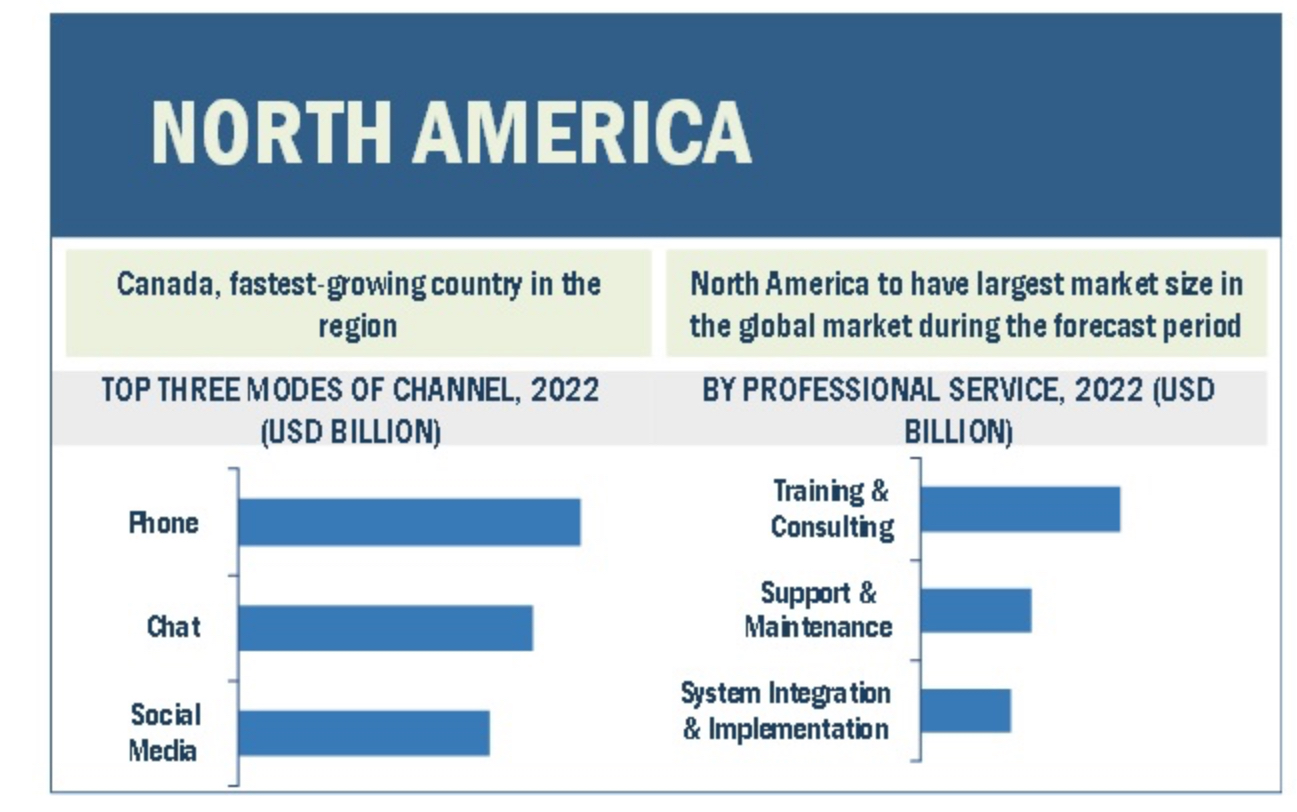
- The global call center AI market is projected to increase from $1.6 billion in 2022 to $4.1 billion by 2027, growing at a compound annual growth rate (CAGR) of 21.3% over this period (MarketsandMarkets)
- North America is projected to lead the call center AI market, driven by the region’s early adoption of AI technologies in contact centers (MarketsandMarkets)
- The healthcare and life sciences sector is expected to see the fastest growth in the call center AI market, fueled by the urgent need for streamlined patient communication and support services (MarketsandMarkets)
- There are currently around 17 million contact center agents globally (Gartner)
- Contact centers are increasingly focused on reducing the volume of assisted contacts and overall service demand by improving digital capabilities. In 2023, organizations reported achieving only 55% of their strategic goals. To close that gap, 30% are upgrading their contact center solutions in 2024, with another 42% planning updates in 2025 (Deloitte Digital)
Operational KPIs & efficiency metrics
From average handle time to occupancy and transfer rates, these benchmarks expose inefficiencies and guide staffing, training, and tech investments.
Here’s a closer look at the latest performance metrics :

- Traditionally, contact centers aim to answer 80% of calls within 20 seconds. But many are now pushing for higher standards, targeting 90% of calls answered within just 15 seconds (Call Centre Helper)
- 45.7% of contact centers aren’t tracking customer emotion and missing valuable insights into customer sentiment and potential agent performance issues (Call Centre Helper)
- A good first call resolution (FCR) rate falls between 70% and 79%. Anything below 70% signals a need for improvement. Only 5% of call centers reach a world-class FCR rate of 80% or higher, which is an elite benchmark in customer experience (SQM Group)
- A good CSAT score in the call center industry ranges from 75% to 84%. Scores below 75% indicate room for improvement. Only 5% of call centers achieve a world-class CSAT score of 85% or higher. CSAT can vary by call type, industry, and customer touchpoint (SQM Group)
- The industry standard for Average Handle Time (AHT) in customer service call centers is around 10 minutes, though some report it closer to 7 minutes. AHT varies widely depending on call type, line of business, and industry (SQM Group)
- The standard call center occupancy rate ranges from 75% to 85%. Rates above 85% are often seen as unsustainable, leading to agent burnout and a high-stress work environment. Most leaders agree it’s not healthy to keep agents operating at that level for long (SQM Group)
- The industry standard for call abandonment rate is around 6%. Rates below 5% are considered good, while anything above that is usually too high. Top-performing call centers with strong CSAT scores often keep abandon rates at 3% or lower. Abandon rates can also vary by industry, call reason, time of day, and day of the week (SQM Group)
- The industry standard for call transfers in call centers is around 19%. However, a strong benchmark is 15% or less. Keeping transfer rates low helps improve first-call resolution and customer satisfaction (SQM Group)
Customer experience (CX) statistics
Customer expectations are higher than ever. People want speed, personalization, and empathy, often all at once. These numbers show how much these expectations are influencing loyalty, spending behavior, and overall satisfaction:

- CX quality among brands in the US sits at an all-time low after declining for an unprecedented third year in a row (Forrester 2024 US Customer Experience Index)
- Companies that prioritize CX see 41% faster revenue growth, 49% faster profit growth, and 51% better retention (Forrester 2024 US Customer Experience Index)
- 1 in 3 customers will leave a brand they love after just one bad experience, while 92% would completely abandon a company after two or three negative interactions (PwC)
- In the U.S., even when people love a company or product, 59% will walk away after several bad experiences, 17% after just one bad experience (PwC)
- 63% said they'd be more open to sharing their data for a product or service they say they truly valued (PwC)
- 65% of shoppers find a positive customer experience to be more influential than advertising (PwC)
- Half of Americans believe loyalty programs matter more than ever. Support is strongest among six-figure earners (57%) and Millennials (56%), while only 43% of Gen Zers feel the same (LendingTree)
- If it's a brand they really like, more than two out of three people in the U.S., Australia, and the UK would pay up to 25% extra. (UserTesting)
- 55% of consumers expect better customer service year-on-year (Microsoft Dynamics Global State of Customer Service)
Agent performance & workforce stats
A high-performing contact center starts with engaged, well-supported agents. But between burnout, high turnover, and remote work challenges, agent stability is under threat.
These workforce data highlights just how critical it is to invest in training, tools, and career growth:

- Three out of four respondents in a 2024 Deloitte survey said agents are overwhelmed by too many systems and too much information, causing longer calls and weaker outcomes (Deloitte Digital)
- Agent attrition averaged 52% annually in 2023, though the rate varied depending on the industry and region (Deloitte Digital)
- Companies that actively invest in agent career progression achieved 23% more of their strategic goals compared to those that only plan to invest later (Deloitte Digital)
- 69% of respondents in a survey said they’ve changed or considered changing careers in the past year. The top reasons driving this shift include remote work options (67%), better work-life balance (52%), more fulfilling roles (48%), and the chance to grow new skills (40%) (FlexJobs)
- 45.5% of agents said their employer provided a cost-of-living pay raise. Another 38.3% received enhanced benefits, and 43.5% were offered paid overtime options (Call Centre Helper)
- Only 48.3% of agents said they don’t plan to leave their call center job within a year. The rest were either open to leaving (26.6%) or unsure (25.1%), signaling weak retention (Call Centre Helper)
- Attrition is a widespread issue in contact centers; only 23.4% said it’s not a problem. Of the rest, 30.2% are taking active steps to address it, 25.9% saw little impact from their efforts, and 20.5% lack the budget or resources to act (Call Centre Helper)
AI and automation in contact centers
AI-powered contact centers are now handling repetitive tasks, routing interactions more intelligently, and giving agents real-time support. These adoption trends show which use cases are gaining traction and which ones still need refinement:

- Conversational AI will cut customer service costs by $80 billion by 2026 (Gartner)
- By 2026, 1 in 10 agent interactions will be automated, up from just 1.6% in 2022, driven by the growing use of AI in contact centers (Gartner)
- The cost of integrating conversational AI at $1,000 to $1,500 per agent, with some organizations reporting costs as high as $2,000. As a result, early adoption is expected mainly among enterprises with 2,500+ agents and the technical resources to support the investment (Gartner)
- 56% of global business leaders believe generative AI will boost efficiency and productivity, making it the most expected benefit. Far fewer see it helping shift workers to higher-value tasks, uncover insights, or strengthen customer relationships (Deloitte Digital)
- Early adopters of generative AI were 34% less likely to report that their agents feel overwhelmed by the information they need to manage (Deloitte Digital)
- Over half of early adopters say they use generative AI tools to draft customer responses, support agents in real time, and summarize interactions for insights. Other leading use cases include enhancing virtual agent conversations, analyzing customer intent, and improving service quality with automated scoring and performance management (Deloitte Digital)
- Chatbot adoption in contact centers increased slightly from 36% in 2022 to 37.5% in 2023 (Call Centre Helper)
- About a third (31.6%) of contact center professionals said they want to implement AI to improve customer satisfaction. However, most are driven by efficiency gains—33.2% aim to reduce contact volume, 20.4% want to cut costs, and 9.2% focus on revenue growth. Among the 5.6% who selected “other,” reasons included auto-quality monitoring, process improvement, automation, and saving time (Call Centre Helper)
Omnichannel & digital engagement stats
Customers want to interact with businesses on their terms—SMS, chat, voice, social, and more. But fragmented systems make that hard. As businesses work to unify channels, recent trends point to shifts in customer preferences and the contact center technologies rising to meet them:

- Companies with the strongest omnichannel customer engagement strategies enjoy a 10% Y-O-Y growth, a 10% increase in average order value and a 25% increase in close rates. (Adobe)
- Successful right-channeling depends on next-gen tools that minimize friction across channels like digital omnichannel integration platforms. Among companies using these platforms, 71% reported significant business value, including an average 9% drop in cost per assisted contact. To maximize impact, organizations need up-to-date, accurate customer data available on demand (Deloitte Digital)
- Most contact centers today use routing tools for agent-assisted chat (74%) and phone calls (51%). These single-channel solutions have helped achieve an average agent occupancy rate of 76% (Deloitte Digital)
- Channel-specific tools fall short when it comes to quickly connecting customers with the right agent across multiple channels or managing fluctuating contact volumes. To address this, 25% of contact centers have adopted dedicated omnichannel routing tools (Deloitte Digital)
- There’s been a clear shift in channel usage. From 2022 to 2023, video dropped from 0.6% to 0.4%, and email from 17.8% to 16.5%. Meanwhile, SMS rose from 1.3% to 1.6%, social media from 2.8% to 3%, and live chat from 7% to 7.2%. This trend suggests customers prefer faster, more convenient ways to get support (Call Centre Helper)
- Inbound voice saw an increase from 53.5% in 2022 to 55.4% in 2023. This highlights rising customer needs during economic uncertainty, as people turn to service providers for both financial guidance and reassurance (Call Centre Helper)
Quality assurance & monitoring
Modern centers are turning to automation, speech analytics, and real-time feedback to scale insight and improve service. The latest practices show how quality monitoring is evolving from manual scorecards to strategic enablers:
- The use of interaction and speech analytics in contact centers rose from 28% in 2022 to 37.5% in 2023, indicating a clear sign of growing adoption (Call Centre Helper)
- Asking customers to complete a post-contact survey is a standard practice in the industry, but 19.1% of contact centers never do so. While this may seem alarming, many of these centers likely rely on more advanced methods like interaction and speech analytics that reduce the need for a server (Call Centre Helper)
Contact center future trends
Looking ahead, the contact center is set to become even more central to customer experience strategy. Emerging trends like predictive AI or hyper-personalized service signal a future where the contact center is less reactive and more proactive and revenue-aligned:
- Service innovators are setting the standard. They’re 7x more likely than others to offer premium service tiers either for a fee or to high-value customers. These organizations also provide more service upgrades, including 24/7 availability (89% more likely), direct routing to experienced agents (50% more likely), and access to onshore agents (33% more likely) (Deloitte Digital)
- The global cloud-based contact center market was valued at USD 14.5 billion in 2021 and is projected to grow to USD 82.43 billion by 2030, at a CAGR of 21.3% from 2022 to 2030. North America is expected to lead the market in terms of share (GlobeNewswire)
- The global omnichannel retail solutions market was valued at USD 5.96 billion in 2021 and is projected to grow at a CAGR of 13.6% from 2022 to 2030. This approach integrates physical and digital channels to provide a seamless shopping experience across online and in-store touchpoints (Grand View Research)
How Plivo helps you outperform these benchmarks
Plivo is an AI-first communications platform that helps businesses automate customer engagement across SMS, Voice, WhatsApp, and Chat. With our no-code AI Agent Studio and enterprise-grade infrastructure, you can deploy intelligent automation that works alongside your existing contact center operations.
Here's what Plivo offers:
- AI Agents for Convert, Engage & Delight: Deploy specialized AI agents for sales conversion, customer engagement throughout their journey, and 24/7 customer support—all customizable to your business needs
- No-Code AI Agent Studio: Build AI agents using our visual drag-and-drop builder. Choose from multiple LLMs, including OpenAI, Google, Anthropic, and Meta, to power conversations that match your brand's voice
- Omnichannel AI Support: Deploy the same AI agent across voice calls, SMS, WhatsApp, and webchat for consistent customer experiences across all touchpoints
- Customer Data Platform: Unify customer data and create intelligent segmentation to trigger personalized AI interactions based on customer behavior and preferences
- Enterprise-Grade Reliability: 99.99% uptime guarantee with global coverage across 190+ countries, plus full compliance with GDPR, SOC 2, HIPAA, PCI DSS, and ISO 27001
- Flexible Integrations: Connect with your existing CRM, helpdesk, and business systems, including Salesforce, HubSpot, Shopify, Zendesk, and more
Ready to upgrade your contact center? Book a demo now.

31 Top Customer Satisfaction Metrics Every Business Should Track in 2025
Know the 31 most important customer satisfaction statistics for 2025 to understand their role in driving loyalty and business success across industries. Read more.
When it comes to a successful business, nothing matters more than building customer trust. IBM’s report also supports this: 65% of CEOs now view customer trust as more vital to business success than product innovation or quality.
Why does this matter more than ever?
Because customers today aren’t just choosing between you and your closest competitor. They’re comparing you with the best experience they’ve had anywhere.
Like personalized interactions, good service, and genuine care.
That's why businesses focusing on customer satisfaction consistently see stronger customer loyalty, reduced churn, and ultimately, better financial outcomes.
So, how exactly does customer satisfaction drive real business results to stay ahead in 2025?
Let’s dive into the top customer satisfaction statistics, strategies, and benchmarks that matter.
Why customer satisfaction is key to standing out in a crowded market
In markets where products and pricing are increasingly similar, customer experience becomes the differentiator.
And that experience?
It’s defined by how satisfied your customers feel: Before, during, and after a purchase.
According to Deloitte’s 2024 Consumer Loyalty Report, 86% of consumers consider financial rewards and simplicity essential to loyalty programs, showing that satisfaction often starts with meeting fundamental expectations.
Meanwhile, Forrester reports that customer-obsessed organizations report 41% faster revenue growth and 49% faster profit growth.
The message is clear: businesses that prioritize satisfaction are better positioned to lead.
Here's how measuring satisfaction helps you lead:
- Reducing churn and increasing customer lifetime value: Tracking satisfaction scores helps you spot at-risk customers early. Addressing their concerns in time boosts retention and long-term, loyal customers more than new ones.
- Prioritizing improvements that drive loyalty: Satisfaction data helps you zero in on what truly matters. It could be faster response times, better onboarding, or smoother checkout flows, so you can fix the issues that move the needle.
- Proving the financial impact of satisfaction: When CX initiatives are backed by satisfaction metrics, it becomes easier to tie those efforts to outcomes like repeat purchases, higher NPS, and increased revenue per customer. This makes a clear case for continued investment.
31 key customer satisfaction statistics for 2025
Understanding your industry's customer satisfaction benchmarks helps set realistic goals and uncover growth opportunities.
Here's a look at how key sectors are performing:
Industry benchmarks for customer satisfaction
Here's a snapshot of customer satisfaction insights in key sectors for 2025:
1.Retail
Customer satisfaction in retail remains a major challenge. IBM reports that only 9% of consumers are satisfied with in-store shopping, while just 14% feel the same about e-commerce. These low numbers signal a clear need for better engagement and service design.
One of the biggest opportunities for retailers lies in personalization. Yet, only 60% of consumers feel the tailored experiences they receive truly meet their expectations. 73% of consumers prioritize personalized experiences or rewards as essential components of a loyalty program.
To add, supermarkets and online retailers lead the pack for repeat purchases, with 82% of customers returning, but satisfaction levels still show room for improvement. As consumer expectations evolve, staying ahead requires a focus on improving these experiences.
In line with this shift, 3 out of 5 consumers are open to using AI tools for personalized shopping. Retailers that fail to adapt risk falling behind in a market where customer demands are continuously rising.
2.Telecommunications
Telecom providers are under increasing pressure to deliver reliable and consistent experiences as customer expectations evolve. Despite widespread access to digital tools, many users still encounter service friction that impacts overall satisfaction.
Here’s a snapshot of key telecom customer satisfaction statistics for 2025:
- The telecommunications industry has a Net Promoter Score average of 31, which is the lowest industry average according to the latest NPS benchmarks report. Even logistics, which is also a difficult industry for customer experience, has a higher NPS average of 38.

- Only 35% of consumers say they are “satisfied” or “very satisfied” with telecom customer service, one of the lowest across all industries surveyed.
- 70% of consumers prioritize reliable service over faster speeds, reflecting a shift in what customers truly value in a digital-first world.
- A customer-centric model can boost annual revenue by up to 8%, reduce service costs by 10–15%, and increase customer satisfaction scores by 20 to 40 points.
- 75% of industry leaders believe that hyperscalers (large tech companies like Amazon, Microsoft, and Google) will become the dominant disruptive threat in the telecom industry over the next five years.
- 58% of executives believe most of today’s workforce will need to be upskilled or replaced in the next five years. However, only 10% of telcos are actively focusing on redefining their employee proposition and purpose as part of their people strategy.
- The two major drivers identified by telecom leaders are:
- 67% cited growth in the core connectivity business
- 60% focused on margin development through additional cost reductions and efficiencies
These numbers show a clear path forward: telecom companies that invest in AI, personalization, and consistency across service channels stand to gain significantly in customer trust and loyalty.
3.Banking and financial services
IBM's 2025 outlook emphasizes the importance of customer trust and satisfaction in the banking sector, suggesting that institutions investing in customer experience are better positioned for long-term success
A Forrester's research indicates that smaller banks called challengers and cooperative banks called mutuals are doing better than traditional banks. In fact, customers in eight of the top 10 banks in Europe feel more positive about their experience compared to those using traditional banks.
Also, an Accenture report states that banks in the top 20% for customer advocacy see 1.7x faster revenue growth overall, with growth in North America reaching 2.6x.
By aligning strategies with industry standards and focusing on customer-centric initiatives, organizations can enhance loyalty, reduce churn, and achieve sustainable growth.
CSAT scores by different industry sectors
IBM’s latest data shows how CSAT scores vary by industry. Here’s a quick look at the numbers:
Trending satisfaction metrics in 2025
Companies are focusing on new trends that give a deeper look into how customers feel and what keeps them coming back. Here’s what you need to know:
- Gap in real-time action: Despite this focus, only 13% of CX leaders feel they have the tools to act on real-time customer insights, even though they prioritize instant customer actions
- Satisfaction tracked over time: Longitudinal metrics show a downturn in CX. Forrester’s 2024 index found U.S. customer satisfaction fell by 1% point, marking a third consecutive annual decline, with 9 out of 13 industries seeing significant drops and 25% of brands suffering major CSAT decreases (fewer than 1 in 10 brands improved).
- CX metrics go public: Forrester predicted that in 2024, half of large brands will experiment with customer-facing generative AI and start reporting their CX metrics to investors as formal performance indicators. This underscores how customer satisfaction scores are becoming key business metrics on par with financials.
Measuring customer satisfaction across segments
Measuring overall satisfaction is useful, but looking at different customer groups gives a clearer picture. Here’s why it matters to track satisfaction across segments:
Linking satisfaction scores to customer retention rates
Satisfied customers are more likely to remain loyal and continue doing business with a company. According to Forrester's 2024 US Customer Experience Index, customer-obsessed organizations reported 51% better customer retention compared to non-customer-obsessed organizations.
Segmenting satisfaction data to uncover insights
It’s important to measure satisfaction in different types of customers, like by their behavior or demographics, to learn valuable insights.
Forrester's 2024 US Customer Experience Index also highlights that only 3% of companies are currently customer-obsessed, emphasizing the need for targeted strategies across various customer segments.
Why collecting and analyzing customer feedback is critical
Collecting and analyzing customer feedback is essential for building loyalty, improving experiences, and identifying opportunities to innovate.
Deloitte’s report shows that 51% of Americans are willing to share personal data for better experiences, provided companies are transparent and give them the option to opt out.
This clearly emphasizes how trust is a key factor in gathering meaningful feedback and leveraging it to improve customer satisfaction.
According to a study by IBM, consumers want tech-driven enhancements:
- 55% are eager for AI-powered virtual assistants
- 59% are open to AI applications while shopping
- 62% say price is the top reason they switch brands
These insights stem from widespread inflation concerns, which have reshaped consumer behavior. This shows why real-time feedback is important to understand shifting expectations.
Elevate your customer experience with Plivo CX
As businesses grow, managing customer interactions across multiple channels becomes increasingly complex. Now, with the advent of AI, customer expectations are at an all-time high, with demand for personalized, real-time support only growing.
However, scaling these experiences without increasing costs is a challenge that many companies still face.
That’s precisely the problem Plivo CX addresses.
Plivo CX is a powerful omnichannel customer experience platform designed to help businesses engage their customers across multiple messaging channels.
It leverages AI to deliver personalized, timely interactions at scale, boosting customer satisfaction and loyalty without increasing costs.
Here’s how Plivo CX can boost your customer experience:
- Timely engagement: Automate messaging and scheduling to ensure your communications reach customers at just the right moment by addressing their needs in real time.
- Sales conversion agent: Enhance customer interactions with AI that personalizes offers and content, thus increasing conversions and sales.
- Flexible customer segmentation: Segment your customers with our Audiences feature based on their behavior, preferences, and past interactions. In this way, you can deliver tailored, relevant experiences that meet individual needs.

- Customer retention agent: Utilize our AI-driven messaging to proactively reach out to customers with relevant and timely communications.
- Pre-sales inquiry agent: Handle customer inquiries swiftly and efficiently with our AI agents. This ensures quick responses and effective lead qualification, so no opportunity is missed.
- Copywriter AI: Provide fast, personalized SMS through human-like, real-time interactions and pre-built templates at scale with Copywriter AI. Now, you can ensure each message resonates with your audience.

- E-commerce platform integrations: Seamlessly integrate with popular e-commerce platforms like Shopify, BigCommerce, WooCommerce, and Magento. Provide a unified customer experience across all touchpoints.
With Plivo’s extensive carrier network covering over 220 countries, businesses can reduce their SMS costs by as much as 70% while boosting ROI by three times.
Companies leveraging Plivo CX report outstanding returns, generating an impressive $71 for every $1 spent on SMS marketing campaigns.
Book a free demo today and see how you can deliver exceptional service while scaling your business.

How to Use AI for SMS Marketing
Learn about AI SMS marketing and how it personalizes messages, boosts engagement, and automates campaigns.
With 90% of texts read within three minutes, SMS offers unmatched visibility. However, for many marketers, the real challenge is turning that attention into clicks and conversions. It’s like shoppers streaming into a mall, browsing every window, but leaving without making a single purchase.
AI-powered SMS marketing makes a difference here.
Instead of just getting your messages “seen,” AI SMS marketing helps you get them “clicked”, by delivering the right message to the right person at the right time.
In this guide, we’ll show you exactly how to use AI for SMS marketing. We’ll also help you identify common bottlenecks, explore how AI can solve them, and share actionable steps to help you hit your SMS campaign goals!
How AI SMS marketing benefits businesses
From automating message flows to predicting the best send times, AI in SMS marketing helps businesses save hours weekly on manual work.
But that’s not it. By integrating AI, you can:
Personalize at scale
Consumers have become experts at tuning out generic company messages, so the last thing you want is for your SMS campaigns to blend into the background noise.
SMS AI changes this. It dynamically tailors content based on customer demographics (like age, gender, and location) and real-time behaviors (such as purchase history or browsing patterns).
This means you can convert mass messaging into highly relevant, individualized communications that help you drive a higher return on investment (ROI).
The power of AI for personalization in SMS marketing extends far beyond simple reminders or cart abandonment alerts. It even recommends products your users may like, adjusts pricing, and curates personalized campaigns. (More on this later in the article!)
Automate with intelligence
With intelligent SMS marketing automation, you can set up triggered workflows that respond instantly to customer actions.

For example, you can gently nudge when someone leaves items in their cart, send a thank-you note after their first purchase, or request quick feedback. Plus, with chat-style auto-replies and AI-powered bots, you can handle simple customer conversations, like answering FAQs or confirming appointments, right in the SMS thread, 24/7.
Optimize with AI-powered A/B testing
With AI, you can test multiple message variations at once, track how different groups respond, and get early signals on what’s driving clicks or replies. AI spots patterns in open times, link engagement, and even response rates. Then, it helps you adjust content or timing before the campaign ends.
AI also determines the ideal send times for each audience segment so your SMS messages reach recipients when they’re most likely to engage. Plus, it continuously refines your campaigns in real time for maximum impact.
Let’s understand the benefits of AI in SMS marketing through its applications.
Practical AI SMS marketing applications
AI SMS marketing empowers you to hit your campaign targets, whether that means boosting click-through rates, driving more conversions, or increasing customer engagement.
But the real value lies in how AI achieves these results behind the scenes.
Smart segmentation
When 34% of consumers become annoyed by SMS messages irrelevant to their needs and interests, opt-out rates automatically increase. The reasons are ample: bad timing, irrelevant messaging, lack of personalization, unclear expectations, etc.
AI lets you automatically classify your audience into meaningful segments based on their engagement levels, purchase history, and behaviors.
For example, as shown in the image below, you might have segments like “High Value Customers” or “Holiday Shoppers.” This allows you to curate highly targeted campaigns for each group and deliver personalized offers, timely reminders, or exclusive deals.

Dynamic content insertion
AI-powered dynamic content lets you personalize each SMS with details like product recommendations, names, or exclusive offers.
For instance, if a customer abandons a cart with a specific item, the platform sends a message like, “Hi [name], your Nike Air Max is still waiting for you. Complete your purchase now and enjoy 10% off!”
This level of personalization boosts engagement and drives higher sales.
Automated replies and conversational flows
AI replies are smarter and more conversational than ever.
Modern AI SMS chatbots can handle FAQs, order status requests, and opt-out commands with natural, context-aware responses that feel genuinely human.
For instance, if a customer texts “Where’s my order?” or “I want to return product X,” they receive an instant, personalized update tailored to their situation. Even better? When a query is more complex or sensitive, the platform escalates the conversation to a human agent without delay.

Abandoned cart recovery
AI-powered abandoned cart recovery automatically adjusts tone, offer, and timing of messages based on each customer’s cart value and behaviors.
Behavior-triggered SMS
Apart from cart abandonment recovery and product recommendations, the use cases of AI in e-commerce include identifying fake reviews, fraud detection, and voice search optimization.
So if a customer suddenly places multiple high-value orders from different locations or uses inconsistent payment information, AI instantly flags the transaction as potentially fraudulent and triggers an SMS alert to both the customer and the internal risk team.
Upsell and cross-sell campaigns
SMS AI surfaces the right opportunities to recommend additional products that align with each customer’s preferences and actions.
For instance, after a customer buys a smartphone, Plivo’s Upsell and Cross-Sell Agent can follow up with a timely SMS recommending a phone case or screen protector. It can also optimize the timing of these offers, ensuring that suggestions are made when the customer is most receptive, such as right after the initial purchase or when they revisit the website.
Now that you know the benefits of AI SMS marketing, how do you find a platform that truly fits your business needs?
What to look for in an AI-driven SMS platform
When choosing an AI-driven SMS platform, focus on features that make your campaigns smarter. These include:
- Machine learning for segmentation: Prioritize a platform that automatically sorts your audiences based on real behaviors and attributes. This way, you can send the right message to the right person, trigger events, and manage opt-outs.
- NLP to generate messages: Look for built-in AI tools with natural language processing (NLP) that help you craft engaging, on-brand messages in seconds.
- AI-based A/B testing and optimization: Choose a platform that can automatically test different versions of your SMS, analyze the results, and optimize future sends for higher conversions.
- Auto-reply and AI bot integrations: Ensure it offers AI-powered SMS chatbots to manage FAQs, order tracking, and basic support, so your customers always get quick answers, even outside business hours.
Getting started: Steps to incorporate AI into your SMS strategy
Not sure where to begin with AI and SMS? You don’t need to overhaul everything at once.
Start by asking yourself: What are the current bottlenecks in your SMS campaigns? Are you aiming to boost conversions, increase CTR, or improve personalization?
Then, follow these steps.
Step #1: Audit your current SMS campaigns
- Review your existing SMS templates and campaign workflows.
- Identify repetitive manual tasks (like scheduling, segmentation, or copywriting) and areas where performance lags, such as low engagement or inconsistent personalization.
- Analyze which types of messages and calls to action (CTAs) perform best to spot opportunities for AI-driven improvements.
Step #2: Choose an AI-enabled SMS platform
- Prioritize SMS solutions that offer advanced segmentation, predictive analytics, and automation tools to help you scale as your business grows. Easy integration with your current marketing stack is an added bonus.
- Plivo CX is a strong option as it combines AI-driven segmentation, automated campaign workflows, and an OpenAI-powered copywriting tool to help you craft engaging, personalized messages at scale.
Step #3: Set up behavioral triggers and segmentation logic
- Use AI to segment your audience based on behavior, purchase history, and engagement patterns.
- Establish automated triggers for common scenarios (e.g., abandoned cart, post-purchase follow-ups, re-engagement) to ensure timely, relevant messaging.
Step #4: Test AI-generated copy vs. human-written messages
- Run A/B tests comparing AI-generated SMS messages to those written by your team.
- Ensure key metrics such as open rates, click-through rates, and conversions to determine which performs better.
- Continuously analyze results and let AI optimize future campaigns based on what resonates most with your audience.
Step #5: Refine with retention signals
- Monitor campaign results to see which segments engaged, converted, or dropped off.
- Use AI to identify patterns across time, content style, and customer behavior.
- Create follow-up segments like “one-time buyers” or “frequent clickers, no purchase” to guide re-engagement.
- Adjust future campaign timing, message structure, and tone based on actual user feedback and engagement history.
Let Plivo’s AI-powered platform handle SMS marketing
With so many AI-powered SMS marketing solutions on the market, it can be challenging to find one that truly fits your business. Many platforms either disrupt your existing communication systems or fall short when it comes to sounding genuinely human, leaving customers frustrated and your team with extra work.
Plivo is built to overcome these challenges.
It uses advanced NLP to understand and respond to customer messages just like a real person, so every conversation feels natural and engaging. And when a conversation gets too complex for AI, Plivo automatically routes it to a human agent.
Moreover, Plivo connects easily with popular platforms like Shopify, Salesforce, and HubSpot. So you can sync customer data, automate campaigns, and manage conversations without heavy IT involvement.
Customization is simple, too. You can quickly build custom AI agents tailored to your business goals, whether you want to engage, delight, or convert customers at different stages of their journey. Plus, it lets you set up automated workflows for each agent, so they can instantly trigger personalized messages based on real-time customer actions.
Ready to automate customer conversations? Get started for free with Plivo today!

25+ Omnichannel Customer Service Statistics You Should Know in 2025
Discover essential omnichannel customer service stats that reveal how connected support improves satisfaction, loyalty, and revenue in 2025.
A customer reaches out through your website’s live chat with a simple question. Hours later, they follow up via email. The next day, still waiting for a clear answer, they call your support line.
By this point, they’ve used three channels and repeated their issue to three separate agents.
They’re not alone: 56% of customers say they have to repeat themselves during support interactions. With no shared context or continuity, frustration builds.
Omnichannel customer service is designed to fix this.
In this blog post, we break down the key stats behind the shift to connected support and why businesses can’t afford to ignore it. Let’s begin!
Why omnichannel customer service matters in 2025
Omnichannel customer service helps businesses respond faster, reduce pressure on agents, and keep track of customer issues without starting over each time. It also helps teams spot problems early, identify trends, and improve service quality.
When support systems aren’t connected, these opportunities are harder to spot, and customers notice the difference.
That’s why consistency matters. Research shows that 24% of customers would stop buying from a brand after just one bad experience.

25 trends in omnichannel customer service
These omnichannel customer service statistics and trends reveal what’s shaping the future of connected, seamless experiences in 2025 and beyond.
Customer expectations and satisfaction
When people contact support, they want one thing: to get help without any extra hassle. That means quick answers, fewer handoffs, and not having to jump through hoops.
Omnichannel customer service delivers exactly that with a clear impact on customer satisfaction:
- 45% of firms saw better customer engagement, 35% retained more customers, and 35% reported improved customer loyalty due to omnichannel engagement. Furthermore, 46% of respondents noted a rise in customer lifetime value (CLV). (Forrester)

- 70% of customers globally prefer brands that provide service across multiple channels. (Freshworks)
- Digitizing customer service, notably through proactive omnichannel interactions, can enhance customer satisfaction by 33% while cutting costs by 25-35%. (Odondo)
- Most consumers now switch between at least three channels during a single purchase journey. Even though 75% expect a smooth experience across all of them, only 25% feel that retailers meet that expectation. This gap matters because customers who interact across multiple channels are at least 1.25 times more valuable than those who stick to just one. (McKinsey)
- Customers who switch between two or more channels to solve the same issue report much higher satisfaction when the experience is seamless. Customer satisfaction (CSAT) reaches 67% with smooth omnichannel support, compared to just 28% for disconnected multichannel support, the lowest among all support experiences. (SQM Group)
- 73% of customers believe companies should inherently understand their expectations, and 62% expect businesses to proactively anticipate their needs. (Salesforce)
- Four in five companies have implemented a channel steering strategy. Among these, 36% have successfully deflected calls to other channels. This overall approach leads to smoother customer experiences and more efficient issue resolution. (Deloitte Digital)
Efficiency across omnichannel operations
Support teams often lose time moving between disconnected tools like email, chat, and phone systems. This creates delays, forces customers to repeat themselves, and drives up service costs.
Omnichannel service brings everything into one view. Agents can handle requests faster, track previous conversations, and avoid doing the same work twice.
Here’s what that looks like with real numbers:
- Companies utilizing an integrated omnichannel solution experience a 31% reduction in first-resolution times and a 39% decrease in customer wait times compared to those operating in silos. (Zendesk)
- Companies that adopt omnichannel strategies reduce service delivery costs by 3-7%. (McKinsey)
- A study found that 36% of respondents experienced improved operational efficiency through omnichannel engagement. Additionally, 25% reported both increased revenue and reduced costs. (Forrester)
- Customers who receive high-quality omnichannel experiences are 3.6x more likely to make additional purchases, driving more cross-sell and upsell opportunities. At the same time, better experiences lower the cost to serve, allowing companies to focus on high-value customers who deliver over 1.6x higher lifetime value. (Deloitte Digital)
- One in three companies use omnichannel integration tools, resulting in a 9% reduction in cost per assisted contact. (Deloitte Digital)
- Most contact centers today use routing tools for agent-assisted chat (74%) and phone calls (51%), helping achieve a solid 76% agent occupancy rate. However, these single-channel tools fall short when it comes to efficiently routing customers across multiple channels or managing fluctuating contact volumes. To address this, 25% of contact centers have adopted dedicated omnichannel routing tools designed to optimize both speed and resource allocation. (Deloitte Digital)
Revenue and retention outcomes
When customers move across chat, email, and phone without starting over each time, they feel heard and valued. That sense of recognition strengthens trust, which naturally leads to deeper engagement and higher spending.
Here’s how that ripple effect plays out:
- Companies implementing omnichannel transformations see a 5-15% increase in total revenue. (McKinsey)
- In 2023, the global omnichannel customer service market was valued at approximately USD 14.2 billion. Projections indicate that the market will expand to USD 35.6 billion by 2032, achieving a compound annual growth rate (CAGR) of 10.8% throughout the forecast period. (Dataintelo)
- Nike has invested in omnichannel improvements, pushing e-commerce sales to over 30% of its business, with a goal of reaching 50%. (McKinsey)
- Companies with strong omnichannel engagement see a 9.5% increase in annual revenue. (Brand Equity)
Omnichannel results across key industries
Omnichannel customer service doesn’t look the same for every industry.
Nevertheless, it’s helping businesses across sectors like retail, banking, and insurance deliver faster support, meet growing expectations, and boost loyalty.
Here’s what it looks like:
- A fashion company saw a 10x increase in mobile app downloads and a 5x boost in mobile revenue within a year of implementing an omnichannel strategy. (Bain & Company)

- One retail company adopted an omnichannel strategy and achieved a significant 54% increase in its net promoter score (NPS), which reflects how loyal its customer base is. (Medallia)
- A report from the financial services industry shows that implementing a centralized customer experience data hub (a key component of omnichannel customer service) can reduce call handling times from five minutes to just two to three minutes. (Capgemini)
- In the insurance industry, 70% of customers expect a multichannel experience, but less than 40% of insurers said that their digital channels were robust enough to help customers switch channels seamlessly during their purchase journey. (Capgemini)
Read more: Omnichannel vs. Multichannel Customer Service: Key Differences Explained
Barriers and emerging trends
Omnichannel customer service is evolving, but not without growing pains. Many companies are still trying to connect the dots between systems, teams, and channels. At the same time, customer habits are shifting fast, often outpacing how businesses respond.
Here's how those changes are starting to show up in the data:
- Between 2022 and 2023, video support dropped from 0.6% to 0.4%, and email declined from 17.8% to 16.5%. In contrast, quicker channels saw growth — SMS rose from 1.3% to 1.6%, social media from 2.8% to 3%, and live chat from 7% to 7.2%. This shift signals a growing customer preference for faster, more convenient support options. (Deloitte Digital)
- Only 13% of companies report that customer data, history, and context carry over fully across interactions and channels. This shows that most businesses still struggle to deliver seamless experiences, forcing customers to repeat themselves and slowing down issue resolution. (Deloitte Digital)
- By 2028, 30% of Fortune 500 companies are expected to consolidate customer service into a single, AI-powered channel, moving away from traditional multichannel support. (Gartner)
- A survey found that 45% of people turn to generative AI tools for quick answers instead of using official customer support channels. This shift impacts omnichannel strategy as customers are no longer sticking to brand-owned channels. To stay relevant, businesses need to rethink support by including third-party AI platforms as part of the overall customer journey. (Gartner)
How Plivo streamlines omnichannel support for better outcomes
Plivo is an all-in-one omnichannel customer service platform that helps you deploy AI agents, which can deliver faster answers, fewer handoffs, and smoother customer journeys across every channel.
But, Plivo’s AI Agents go beyond chatbots. It can engage in human-like conversations, understand intent, and guide customers from discovery to purchase. Whether it’s voice, WhatsApp, webchat, or SMS, they respond with consistent context and clarity across all channels.
For example, if you’re a retail business, Plivo’s AI Shopping Agent can help customers instantly find the right products, compare options, and check what’s in stock. Your customers get quick answers, and your team can focus on more important conversations.

Similarly, with Plivo, you can build AI Sales Agents to qualify leads, recover carts, book appointments, and suggest products. On top of that, each agent is fully customizable to match your brand’s voice and integrate with your product catalog, FAQs, and business rules.

Plus, with Plivo’s Unified Agent Desktop your support team can see conversations from every channel on one screen and can intervene when needed.
With built-in tools like live call barge-in, real-time coaching, and in-depth analytics, you’ll stay in control while your AI agents handle the workload.

If your business is ready to scale personalized service across channels, Plivo makes it possible. Get started for free today.

14 RCS Use Cases for Your Business
Discover 14 high-impact RCS use cases to engage customers, boost conversions, and improve communication.
Back in 2007, most retailers didn’t sell on mobile.
Fast forward to today, and smartphones now drive 78% of global retail traffic and generate 68% of online orders. To match this shift in behavior, your messaging needs to meet customers where they are and how they prefer to engage.
SMS still delivers results with extremely high open rates and a 90-second average response time. However, it lacks the interactive, visual experience modern users expect.
Apps, meanwhile, offer rich functionality—but most users abandon them quickly, with 77% uninstalling or going inactive within three days. That’s where RCS comes in.
RCS (Rich Communication Services) combines the reach of SMS with the rich features of apps with images, buttons, and video without needing a download.
In this blog, we cover how RCS compares to traditional SMS and other messaging platforms, along with 14 practical use cases your business can start using today.
RCS vs traditional SMS: What’s the difference?
To put it simply, SMS is rudimentary, whereas RCS is built for modern mobile users.
For example, with SMS, you’re limited to 160 characters of plain text. It doesn’t have any branding, media, buttons, or delivery insights. It works, but doesn’t stand out.
RCS messaging changes that. It lets you send messages that look and feel like mini apps within the default messaging app on Android.
Think images, videos, product carousels, quick reply buttons, and more with your business name and logo.
Here’s how they compare:
RCS compared to other rich messaging channels
If you’ve used WhatsApp, Facebook Messenger, or Apple Business Chat to engage customers, you’re already familiar with rich messaging: images, buttons, and fast replies.
But each of these platforms comes with limitations around reach, access, and control.
Benefits of using RCS for businesses
With over 1.4 billion global users and nearly 30% smartphone penetration, RCS gives you the scale of SMS with the functionality of an app. If you’re aiming for higher engagement, stronger branding, and quicker conversions, these benefits show why RCS deserves your attention.

Higher engagement than SMS
We are visual creatures. With rich visual elements and interactive content, customers are more likely to engage, explore, and act. This makes your messages harder to ignore and easier to convert.
Better branding with verified sender and media support
RCS messaging lets your business appear with a verified name, logo, and brand color. You can include product images, promo banners, and even videos directly in the message. This builds trust instantly and reinforces brand identity across every customer touchpoint.
Increased interactivity
With RCS, you’re not limited to static text. You can add buttons for checkout, support, or store locator, or display a carousel of products right inside the message. You can guide the customer journey step by step with no external links or confusion.
Frictionless experience
Unlike WhatsApp or mobile apps, RCS doesn’t need an app install or account login. It works natively in the Android messaging app, meaning your customer can view, interact, and buy without leaving the conversation.
The result? Lower friction, faster action, and better results.
14 RCS messaging use cases
Here are some top practical ways you can use RCS to improve communication, boost conversions, and enhance the customer experience:
1.Order confirmations and delivery updates
RCS helps you send interactive, real-time order confirmations and delivery updates that look and feel like app notifications without requiring your customers to download anything.
That means, instead of plain SMS like “Your order #1234 has shipped,” you can send an RCS message with your brand logo, product image, estimated delivery date, a “Track Package” button, and even live updates if the status changes.
2.Appointment reminders and rescheduling
RCS lets you send appointment reminders that go beyond basic SMS alerts. You can include branded visuals, dates, times, and quick-reply buttons like Confirm, Reschedule, or Cancel within the same thread.
This not only reduces no-shows but also streamlines the rescheduling process without needing a phone call or a separate app.

3.Product promotions and flash sales
Grab attention during sales periods with RCS messages that feature product images, discounts, limited-time banners, and tappable CTAs like “Shop Now” or “Add to Cart.”
Rich media helps offers stand out and drive faster conversions.

4.Cart abandonment recovery
Recovering abandoned carts is easier with visuals and interactivity. RCS allows brands to send reminders with product thumbnails, prices, and direct checkout buttons. This also removes extra steps and brings users back into the buying journey, instantly reducing friction and increasing recovery rates.
5.Customer support follow-ups
Instead of email back-and-forth or disconnected phone calls, RCS enables support teams to send follow-ups in the same conversation thread. You can include options like “Issue Resolved,” “Still Need Help,” or “Talk to Agent,” allowing for faster resolution and better customer experience.

6.Feedback and reviews collection
Asking for reviews or feedback becomes more effective when it’s quick and interactive. With RCS, you can send star-rating prompts, multiple-choice questions, or open-text feedback forms within the message.
This increases response rates and helps gather insights without redirecting users to external sites.
7.Event invitations and RSVP management
Drive participation in events by sending visually rich invites through RCS. You can also include event images, time, location, and quick actions like RSVP Yes or Add to Calendar.
With reminders in the same thread, you can boost attendance while keeping the experience friction-free.
8.Loyalty program updates
Keep your most valuable customers engaged by sharing point balances, rewards status, or tier upgrades through RCS. You can even embed CTA buttons to redeem offers, view rewards catalogs, or join challenges. This keeps customers informed while enhancing their overall experience with the brand.
9.Real-time order tracking
Deliver live updates on your customer orders directly via messages. Real-time order tracking provides customers with live information about their order status, including exact location, estimated delivery times, and direct tracking links.
This not only streamlines operations by minimizing the volume of customer inquiries but also reduces customer anxiety about their purchase.

10.Product recommendations based on behavior
Send personalized product suggestions using browsing or purchase history. RCS supports carousels with product images, prices, and CTA buttons, making it easy to go from message to purchase. Behavioral targeting combined with rich messaging leads to higher engagement and upsell potential.
11.Interactive payment processing
Enable your customers to make secure payments directly via a chat interface. RCS can integrate with various payment gateways, allowing a smooth transaction experience without redirecting users to external sites or apps. You get to offer a more integrated and efficient service while reducing cart abandonment rates.
12.Feedback & surveys
RCS lets you send short, visual surveys right inside your customer’s messaging app. You can include star ratings, multiple-choice options, or a quick text box that requires no redirects or logins.
It makes giving feedback feel effortless, so you’re more likely to get honest, timely responses.
13.Retargeting
Think of the last time you got a discount code via text from a store you visited months ago. Now imagine that message with your name, product images, and buttons to claim the offer instantly.
That’s where RCS Business Messaging stands out. It brings together the visual appeal of display ads, the customization of email, and the reach of SMS in one message.
14.One-time passwords (OTPs)
Security and speed matter when you’re verifying a user. One-time passwords are essential for actions like logging in, making payments, or updating account info. But plain-text SMS OTPs often blend in with other messages and don’t always feel secure or user-friendly.
RCS makes OTP delivery clearer and more trustworthy. You can brand the message, verify the sender, and include visual elements like your logo or a status icon. The message appears in a trusted thread, reducing the risk of phishing.
Start creating richer conversations with Plivo
Whether you’re sending order updates, promoting products, or collecting feedback, RCS is a better way to reach your customers where they already are
Plivo makes it simple to get started. It is an all-in-one AI-powered cloud communication platform that helps you send verified, rich messages at scale.
Plivo’s RCS turns plain texts into branded, two-way conversations.This drives stronger engagement and better business results. It gets even better when paired with Plivo’s AI agents and unified customer data platform CDP, becoming a powerful tool for personalized, automated, and scalable marketing.
Here’s what you get with Plivo:
- Real-time personalization: AI agents dynamically adjust RCS conversations based on unified customer profiles and real-time behavior triggers resulting in higher engagement, better conversion rates
- Multi-channel fallback: When RCS isn’t supported by the user’s device or network, messages automatically switch to SMS guaranteeing message delivery and maintaining consistent communication across all devices
- Conversational automation: AI agents seamlessly handle FAQs, process orders, schedule deliveries, and escalate complex queries, all within RCS. This reduces support costs, improves response times, and ensures a smooth, always-on customer experience
- Comprehensive omnichannel Platform: Manage SMS, WhatsApp, Voice, Chat, and RCS from a single dashboard streamlining operations and reducing vendor complexity.
- Enterprise-grade reliability: With 99.99% uptime and global infrastructure, Plivo ensures your campaigns and conversations are always on.
- Built-in security and compliance: Stay protected and compliant with support for GDPR, HIPAA, and SOC 2, ideal for businesses in regulated industries.
- Plug-and-play integration: Easily connect Plivo to your existing CRMs, marketing automation tools, and support systems to get started quickly without heavy development effort.
- Future-ready capabilities: Stay ahead of the curve with a platform built for evolving customer engagement needs positioning your brand as an early mover in conversational commerce.
Ready to go beyond basic SMS and reach customers at speed and scale?
It’s easy to get started. Sign up for free.
Create your account and receive trial credits or get in touch with us.
