

Overview
This guide shows how to write an autoresponder for SMS text messages. Autoresponders can streamline marketing campaigns and subscription signups and reduce the amount of work humans have to do. You can create an autoresponder either by using our PHLO visual workflow builder or our APIs. Follow the instructions in one of the tabs below.- Using API
To implement SMS Autoresponder use-case in the traditional API way, you can refer to the instructions in the below section to begin your implementation.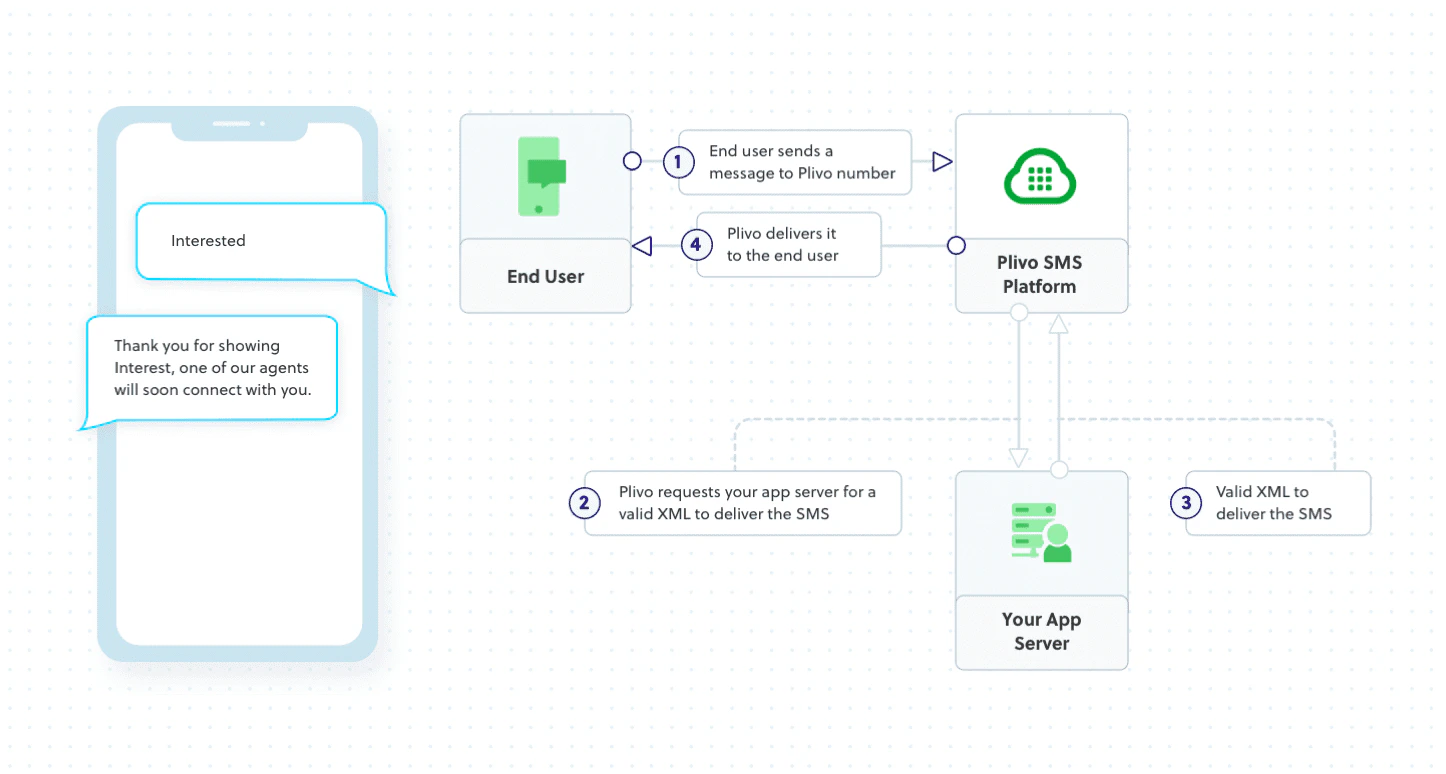

Outline
Implementation
In this section, we will guide you in setting up an app using Plivo’s API to implement SMS Autoresponder use-case. First, let’s make sure you meet these prerequisites before we dive into the code.Prerequisites
To get started, you need a Plivo account — sign up with your work email address if you don’t have one already. To receive incoming messages, you must have a Plivo phone number that supports SMS; you can rent numbers from the Numbers page of the Plivo console or by using the Numbers API. If this is your first time using Plivo APIs, follow our instructions to set up a PHP development environment.Create a Laravel controller to receive and respond to SMS messages
Change to the project directory and run this command.Note:
If you’re using Laravel 8, use the fully qualified class name for your controllers — for example:For ngrok test, add this line to mylaravelapp/quickstart/app/Http/Middleware/VerifyCsrfToken.php.
Create a Plivo application for the autoresponder
Associate the controller you created with Plivo by creating a Plivo application. Visiting Messaging > Applications and click Add New Application. You can also use Plivo’s Application API.Give your application a name — we called oursAutoresponder. Enter the server URL you want to use (for example https://<yourdomain>.com/autoresponder/) in the Message URL field and set the method to POST. Click Create Application to save your application.Assign a Plivo number to your application
Navigate to the Numbers page and select the phone number you want to use for this application.From the Application Type drop-down, selectXML Application.From the Plivo Application drop-down, select Autoresponder (the name we gave the application).Click Update Number to save.