

Sign up for a Plivo account
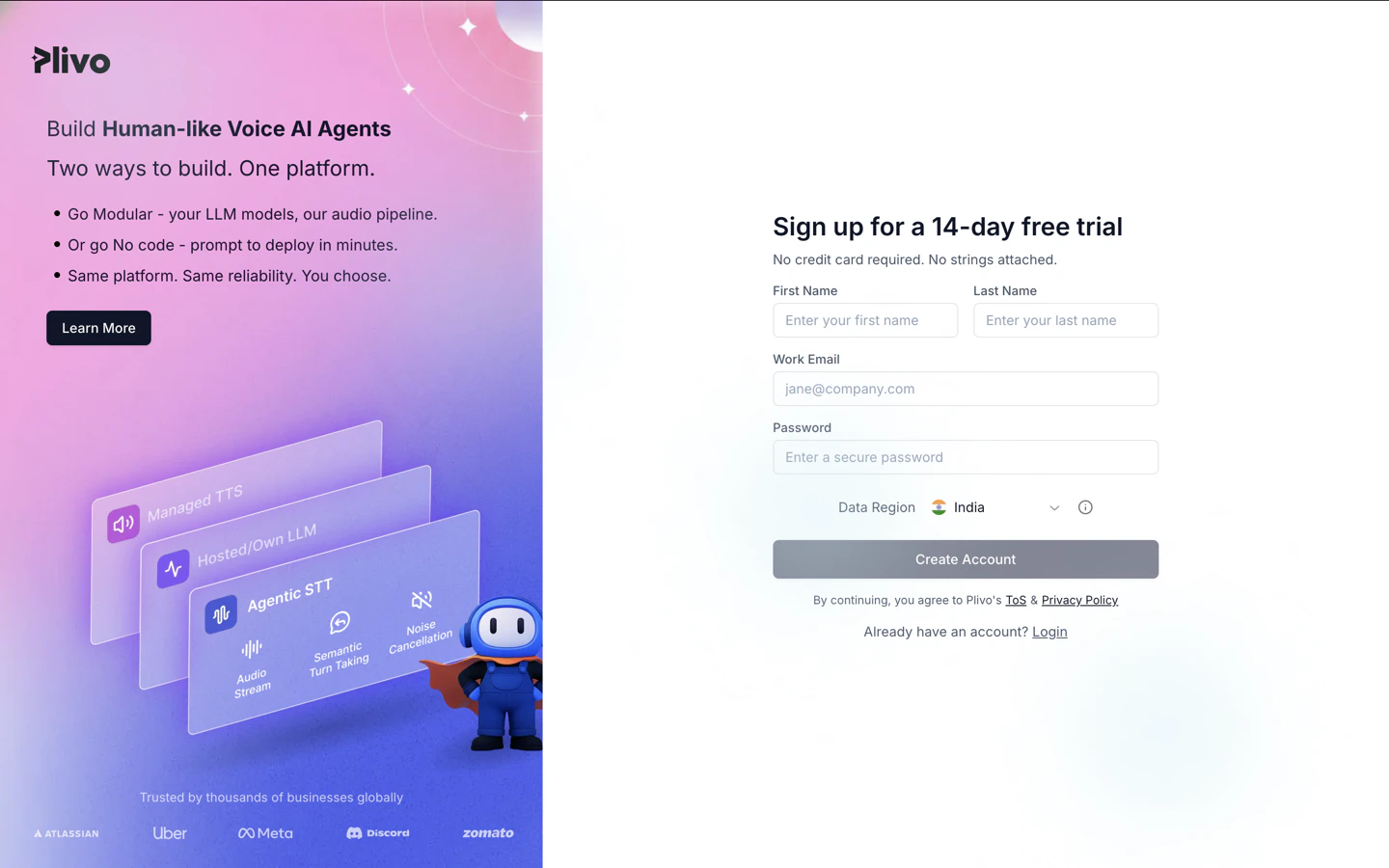
When you sign up with Plivo, we give you a free trial account and free credits to experiment with and learn about our services. You can add a number to your account to start testing the full range of our voice and SMS service features. Follow these steps to get a free trial account:- Sign up with your work email address.
- Check your inbox for an activation email message from Plivo. Click on the link in the message to activate your account.
- Enter your mobile number to complete the phone verification step.
Sign up with your work email address
- Using API
Install Ruby, Rails, and the Plivo Ruby SDK
You must set up and install Ruby, Rails, and Plivo’s Ruby SDK before you send your first SMS message.Install Ruby
Download and install Ruby from its official site.Install Rails
Create a Rails project
Create a Rails project to autogenerate code in the Ruby on Rails folder structure.plivotest directory with the necessary folders and files for development.Install the Plivo gem
Edit the Gemfile and add this line.Send your first outbound SMS/MMS message
You must have a Plivo phone number to send messages to the US or Canada; you can rent a Plivo number from Phone Numbers > Buy Numbers on the Plivo console or via the Numbers API.Create a Rails controller
Run this command in the project directory.- SMS
- MMS
Note:
We recommend that you store your credentials in the
auth_id and auth_token environment variables to avoid the possibility of accidentally committing them to source control. If you do this, you can initialize the client with no arguments and Plivo will automatically fetch the values from the environment variables. You can use ENV to store environment variables and fetch them when initializing the client.Add a route
Edit config/routes.rb and change the lineTest
Run your code.Receive your first inbound SMS/MMS message
To receive incoming messages, you must have a Plivo phone number that supports SMS; you can rent numbers from the Numbers page of the Plivo console or by using the Numbers API.Edit the Rails controller
Edit the app/controllers/plivo_controller.rb file generated earlier and add paste this code into the PlivoController class after the outbound function.- SMS
- MMS
Add a route
Edit config/routes.rb and add this line after the outbound route we added earlier.Expose your local server to the internet
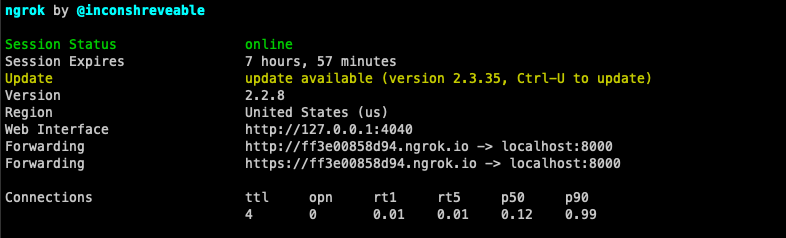
To receive incoming messages, your local server must connect with Plivo API services. For that, we recommend using ngrok, which exposes local servers running behind NATs and firewalls to the public internet over secure tunnels. Using ngrok, you can set webhooks that can talk to the Plivo server.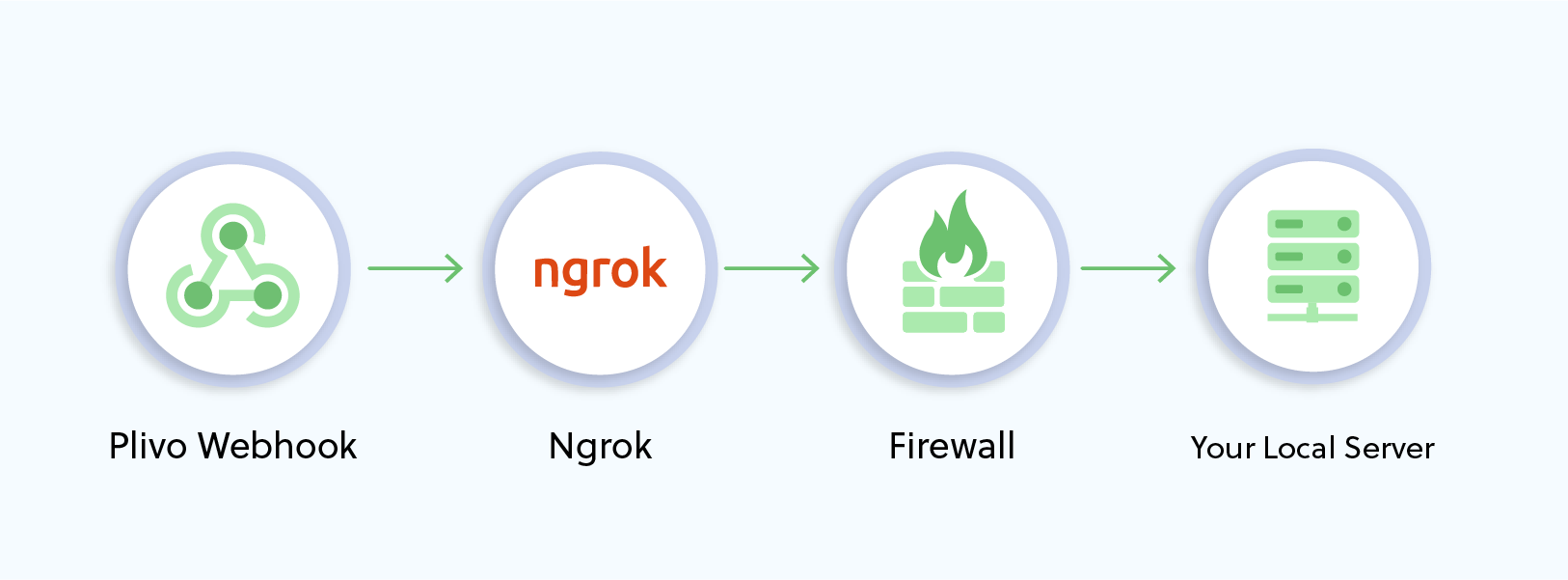
Note: Before starting the service, add ngrok in the config.hosts list in the config/environments/development.rb file in your project. You will see Blocked host errors if you fail to do this.
Create a Plivo application to receive messages
Associate the controller you created with Plivo by creating a Plivo application. Visiting Messaging > Applications and click Add New Application. You can also use Plivo’s Application API.Give your application a name — we called oursReceive SMS. Enter the server URL you want to use (for example https://<yourdomain>.com/receive_sms/) in the Message URL field and set the method to POST. Click Create Application to save your application.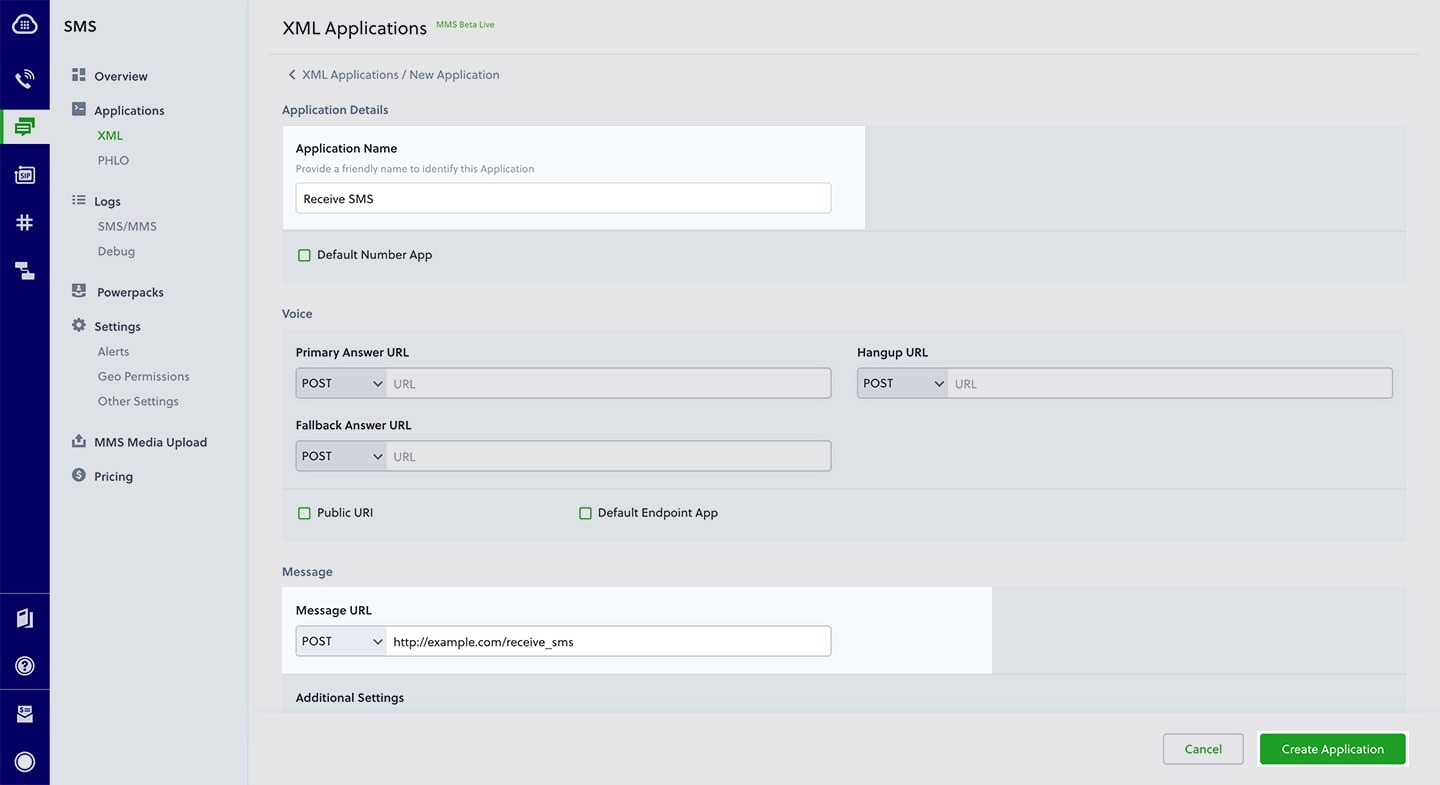
Assign a Plivo number to your application
Navigate to the Numbers page and select the phone number you want to use for this application.From the Application Type drop-down, selectXML Application.From the Plivo Application drop-down, select Receive SMS (the name we gave the application).Click Update Number to save.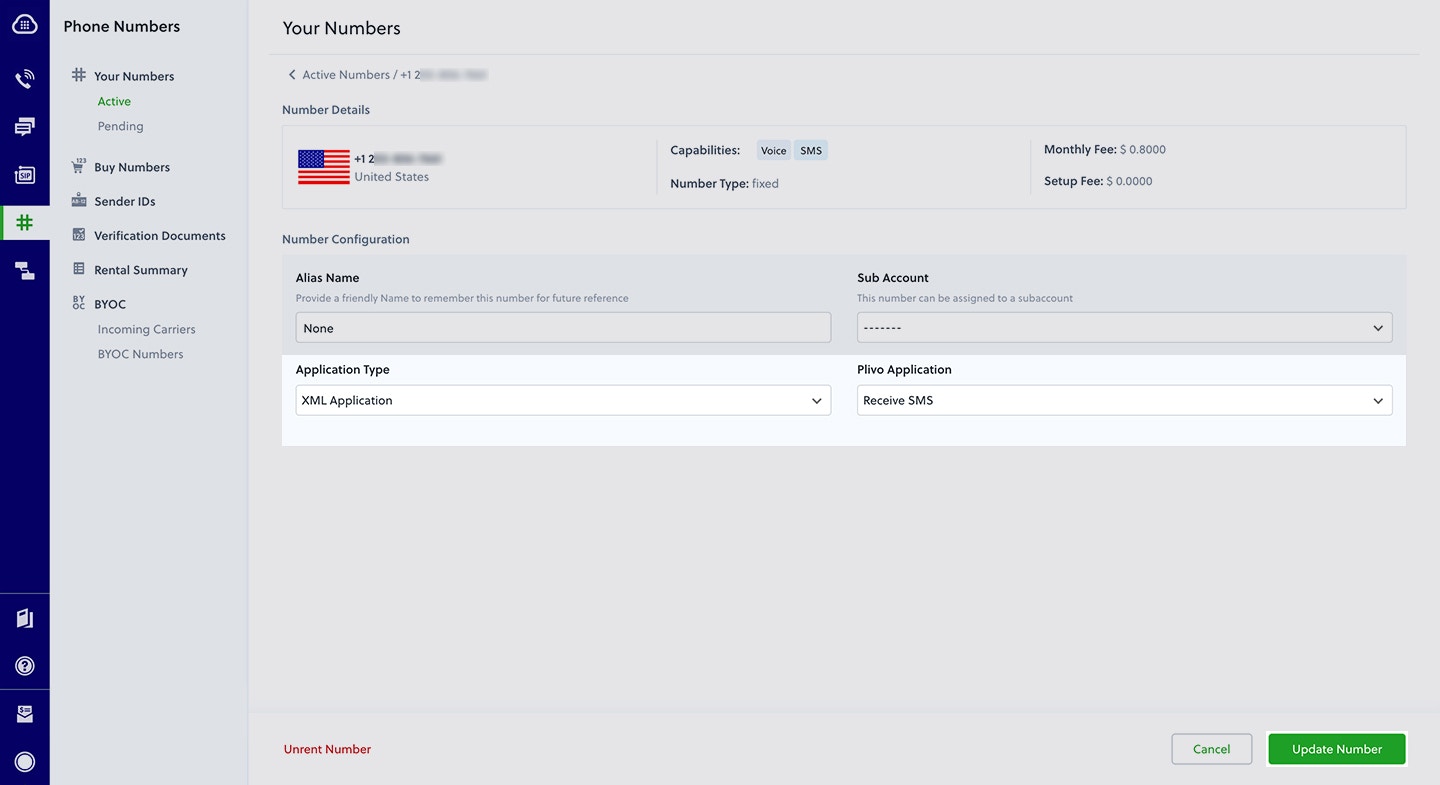
Test
Send a text message to the Plivo number you specified using any phone.Reply to an incoming SMS/MMS message
To receive incoming messages, you must have a Plivo phone number that supports SMS; you can rent numbers from the Numbers page of the Plivo console or by using the Numbers API.Edit the Rails controller
Edit app/controllers/plivo_controller.rb file and paste this code into the PlivoController class after the inbound function we added earlier.Add a route
Edit config/routes.rb and add this line after the inbound route we added earlier.Create a Plivo application to reply to messages
Associate the controller you created with Plivo by creating a Plivo application. Visiting Messaging > Applications and click Add New Application. You can also use Plivo’s Application API.Give your application a name — we called oursReply Incoming SMS. Enter the server URL you want to use (for example http://<yourdomain>.com/replysms/) in the Message URL field and set the method to POST. Click Create Application to save your application.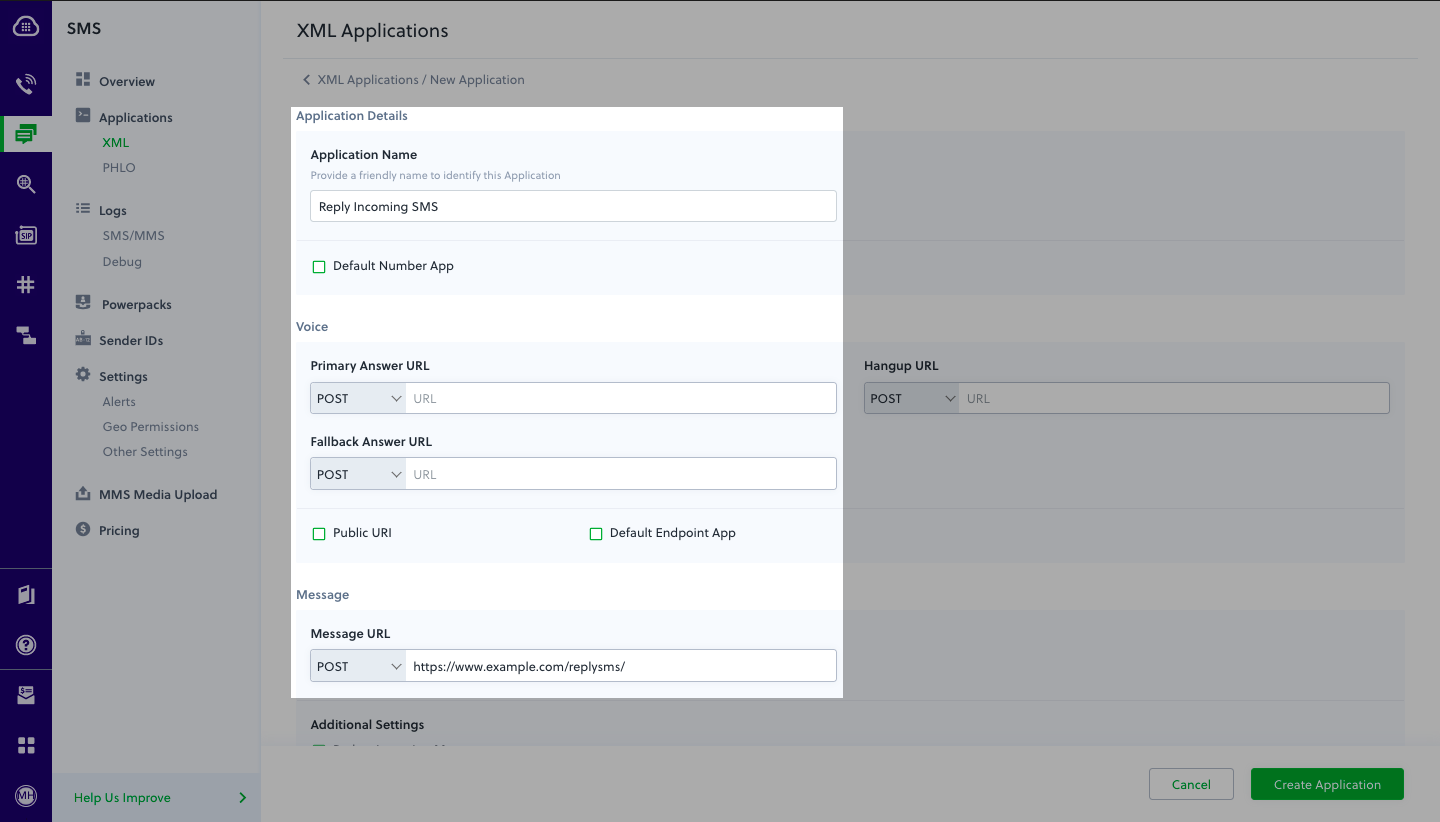
Assign a Plivo number to your application
Navigate to the Numbers page and select the phone number you want to use for this application.From the Application Type drop-down, selectXML Application.From the Plivo Application drop-down, select Reply Incoming SMS (the name we gave the application).Click Update Number to save.